
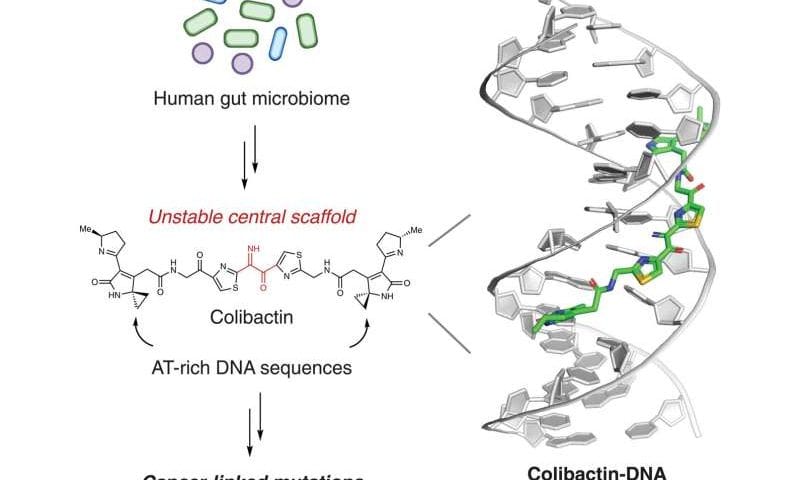
Colibactin is a powerful toxin produced by Escherichia coli and other bacteria living in the human gut. This highly unstable bacterial product causes mutations in DNA that have been linked to colorectal cancer. Because it breaks down quickly, isolating and studying it has been difficult, but now scientists in the U.S. have discovered exactly how colibactin attacks DNA.
Using advanced tools such as mass spectrometry (MS) and nuclear magnetic resonance (NMR) spectroscopy, the team studied the toxin at the atomic level, as reported in a paper published in the journal Science. The scientists overcame colibactin’s instability by growing toxin-producing bacteria directly next to strands of DNA in the lab. Consequently, colibactin attacked the genetic material almost as soon as it was made.
An unstable glue
The study authors discovered that the toxin doesn’t target genetic material at random. It homes in on DNA sequences with high quantities of adenine and thymine bases. The way it damages DNA is by creating a bridge-like connection, called an interstrand cross-link (ICL), between the two strands of the DNA helix. In effect, the toxin acts like glue, binding the two strands together. This damage is permanent and prevents the cell from correctly reading or copying its DNA, which ultimately results in genetic errors that can lead to cancer.
The researchers also revealed that the damage occurs at the same place, in the minor groove. This is the narrow, shallow groove that is formed where the DNA’s backbones are closest together. And the reason is the toxin has an unstable, positively charged core that is attracted to the negatively charged, AT-rich minor groove. So they fit together like a lock and key.
“Our study reveals a strategy for DNA alkylation distinctive among natural products, enhancing our understanding of colibactin’s chemical structure, its recognition of and reaction with DNA, and its downstream effects on the host genome,” commented the scientists in their paper.
Implications for human health
The research is a significant advance in our understanding of the direct link between gut microflora and cancer risk. The discovery that colibactin binds to DNA at a specific site explains the characteristic DNA mutations doctors observe in colorectal cancer patients.
Now that scientists know the structure of the ICL bridge and the mechanism of attack, it can help them develop diagnostic tools to screen people at higher risk and design therapeutics to neutralize the unstable core. It could even inform new ways to reduce cancer risk through dietary changes or treatments that reduce the number of colibactin-producing bacteria in the gut.