
Gamma rays quickly toughen nitrogen‑fixing bacteria

Heat-resilient biofertilizers could help crops cope with rising temperatures but engineering them has been slow and uncertain. A new study at the National Institutes for Quantum Science and Technology (QST) shows that pairing experimental evolution with controlled gamma-ray mutagenesis can accelerate the path to heat-tolerant nitrogen-fixing bacteria, shortening development timelines and opening practical routes to more reliable, climate-ready microbial products for agriculture, food processing, pharmaceuticals, and biofuel production.

The team focused on Bradyrhizobium diazoefficiens USDA110, a workhorse bacterium used to help soybean and other legumes capture nitrogen. While the wild-type grows best at around 32–34 °C and stalls at ~36 °C, QST researchers raised culture temperatures stepwise from 34 °C to 37 °C over 76–83 days and irradiated populations ten times at specific doses, then selected the lines that continued to form robust colonies at 36 °C.

A clear “sweet spot” emerged: around 40 Gy produced the greatest number of stable, heat-tolerant lines, whereas higher doses (80–120 Gy) initially yielded more tolerant lines but with smaller colonies and traits that faded when selection relaxed, consistent with an excess of deleterious mutations. In practical terms, the method lets researchers tune the mutation load to favor beneficial changes while preserving overall fitness.

Genomic analyses of the top performers revealed changes in two core genes across independently evolved lines: the 16S rRNA gene, central to the protein-making machinery, and rpoC, which encodes the β subunit of RNA polymerase. Convergent mutations in such essential systems point to mechanisms that help bacterial transcription and translation continue smoothly under heat stress—precisely the behaviors industry needs in high-temperature processes.

“By combining adaptive laboratory evolution with precisely repeated doses of gamma rays, we shortened the path to robust, heat‑tolerant bacteria from months or years to just weeks,” said Dr. Yoshihiro Hase, project leader at the Takasaki Institute for Advanced Quantum Science (TIAQ), QST. “It’s a practical lever for making biofertilizers more reliable in hotter fields and bioreactors.”

“This controllable mutagenesis avoids transgenic modifications and can be tuned to maximize beneficial changes while limiting genetic load,” added Dr. Katsuya Satoh, senior principal researcher at TIAQ. “We see a route that industry can adopt safely to boost resilience and productivity.”

Beyond agriculture, the approach could be generalized to yeasts, bacteria, and microalgae used in food processing, therapeutic manufacturing, and biofuel production—helping deliver high-quality products at lower environmental cost. In the long term, QST anticipates ultra-low-cost microalgal cultivation and other heat-tolerant platforms that contribute to food and energy security.

Designer enzyme enables yeast to produce custom fatty acids, reducing need for palm oil

Whether they are laundry detergents, mascara, or Christmas chocolate, many everyday products contain fatty acids from palm oil or coconut oil. However, the extraction of these raw materials is associated with massive environmental issues: Rainforests are cleared, habitats for endangered species are destroyed, and traditional farmers lose their livelihoods.

A research team led by Prof. Martin Grininger at Goethe University in Frankfurt, Germany, has now developed a biotechnological approach that could enable a more environmentally friendly production method. The team’s work appears in Nature Chemical Biology.

A molecular assembly line with precise control

At the heart of this research is an enzyme called fatty acid synthase (FAS)—a type of molecular assembly line that builds fatty acids in all living organisms.

“FAS is one of the most important enzymes in a cell’s metabolism and has been fine-tuned by evolution over millions of years,” explains Grininger.

The enzyme typically produces palmitic acid, a 16-carbon fatty acid that serves as a building block for cell membranes and energy storage. Industry, however, primarily requires shorter variants with 6 to 14 carbon atoms, which today are sourced from plant oils produced on large-scale oil palm plantations linked to deforestation and biodiversity loss. The decisive advantage of the new, FAS-based method:

“Fundamentally, our advantage lies in the very precise control of chain length. We can theoretically make any chain length, and we’re demonstrating this with the example of C12 fatty acid, which otherwise can only be obtained from palm kernels or coconut,” says Grininger.

Understanding through modification

Grininger and his team have significantly contributed to understanding the molecular foundations of FAS over the past 20 years. They discovered that chain length is regulated by the interplay between two subunits: ketosynthase repeatedly elongates the chain by two carbon atoms while thioesterase cleaves off the finished chain as a fatty acid.

“We then asked ourselves whether we could go beyond analysis and build FAS with new chain length regulation,” says Grininger. “True understanding begins when you can change or customize a phenomenon.”

Two targeted interventions lead to success

Grininger’s doctoral student Damian Ludig took up this idea.

“We asked what would happen if we specifically intervened in the interaction between these two subunits,” Ludig explains. “Could we then control the chain length of the fatty acids that are produced?”

Ludig employed protein engineering methods where individual amino acids can be exchanged or entire protein regions modified.

“Two changes to FAS through protein engineering ultimately led us to our goal,” says Ludig. “In the ketosynthase subunit, I first exchanged one amino acid, which resulted in chains being extended only with low efficiency beyond a certain length. Additionally, I replaced the thioesterase subunit with a similar protein from bacteria that shows activity in cleaving short chains.”

Depending on further adjustments, Ludig was able to produce short- and medium-length fatty acids.

Collaboration with Prof. Yongjin Zhou’s research group at Dalian Institute of Chemical Physics, Chinese Academy of Sciences ultimately achieved breakthrough results. Zhou and his lab succeeded in developing yeast strains that produce fatty acids containing only 12 carbon atoms instead of 16. Various designer FAS from Grininger’s lab were integrated into these yeasts for optimization.

Both laboratories have already filed patents for their technologies.

“On the Chinese side, Unilever was involved in this project. Our development has thus far taken place without industrial participation. However, we are striving for a collaboration with an industry partner in order to bring the technology into application,” says Grininger.

Thinking ahead: From fatty acids to pharmaceuticals

In a second project, Felix Lehmann from Grininger’s lab took the research even further by investigating how universally applicable FAS are for tailored biosyntheses: “This question is also driven by necessity—to continually develop chemical processes towards more sustainable green chemistry,” explains Grininger.

The specific question was: Can FAS be redirected to make not only fatty acids, but also entirely different compounds, such as styrylpyrones? These molecules are precursors to substances derived from kava plants that attract medical interest due to their potential anxiolytic properties. Here, too, Lehmann achieved success with relatively few modifications.

“First we cut away part of FAS that we didn’t need for our target products; then we altered ketosynthase so that cinnamic acid could be used as a starting material,” he explains.

The team even integrated another protein into the FAS structure so it became part of a multi-enzyme complex.

“In this project we systematically examined how entire biosynthetic pathways can be constructed with FAS from readily available building blocks,” Grininger explains. While the results do not yet have immediate practical applications, they provide important guidance for the future design of novel synthases.

At the intersection of chemistry and biology

“Our lab has made significant strides towards biocatalysis and biotechnological applications over recent years, driven by the contributions of many projects and collaborations. We will continue down this path,” Grininger summarizes. “Within the Cluster of Excellence SCALE, we will also use this enzyme to generate tailored biomembranes, whose analysis will help deepen our understanding of key organelles such as the endoplasmic reticulum and mitochondria.”

Whether technology can indeed alleviate palm oil issues now depends on successful scaling up alongside industry partners. The scientific foundation has certainly been laid and the lab still has many ideas to explore.

A new AI tool could dramatically speed up the discovery of life-saving medicines

Researchers in China have unveiled a new AI framework that could accelerate the discovery of new medicines. DrugCLIP can scan millions of potential drug compounds against thousands of protein targets in just a few hours—ten million times faster than current virtual screening methods.

Typically, when scientists develop new medicines, they use complex computer simulations to fit a 3D drug molecule into a protein pocket. This indicates that it is likely to interact with the protein’s binding site and function. However, the process is incredibly time-consuming and expensive.

Different approach

So Yanyan Lan at Tsinghua University and colleagues decided to take a different approach to drug discovery, as they describe in a study published in the journal Science. Instead of slow physical simulations, DrugCLIP works like a high-speed search engine.

The program uses two neural networks, one for the protein pocket and one for the molecule. It trains them to convert both components into mathematical vectors, and if there is a fit, these will be close to each other in a shared digital space.

The AI only needs to measure the distance between the vectors to find a match. By turning the physical shape of a potential drug into numbers, the system can search through trillions of possibilities instantly.

To make this work for thousands of targets at once, the team used another AI program, AlphaFold 2, to predict the 3D structures of about 10,000 human proteins. This shows how proteins curl into the 3D shapes they need to work.

However, while the computer-generated shapes are generally correct, the pockets where a drug needs to fit often lack sufficient detail. So the researchers created GenPack, which makes the pockets accurate enough for DrugCLIP to find a match.

Superfast

In tests, the AI engine scanned targets representing roughly half of the protein-coding human genome. It matched 500 million potential drug molecules against 10,000 protein targets, completing 10 trillion scans in one day. DrugCLIP also found a matching molecule for TRIP12, a protein linked to cancer and autism. It had previously stumped scientists because its structure wasn’t well understood.

“DrugCLIP is an ultrafast virtual screening method that we rigorously validated through in silico benchmark evaluation and wet-lab experiments,” commented the scientists in their paper.

“Its speed enables trillion-scale screening covering the human druggable proteome, providing an open-access resource that forms a foundation for next-generation drug discovery, particularly for less understood targets.”

DrugCLIP and the database of 10,000 proteins are freely available, so scientists around the world can use them to search for new medicines.

Commercially viable biomanufacturing: Designer yeast turns sugar into lucrative chemical 3-HP

Using a tiny, acid-tolerant yeast, scientists have demonstrated a cost-effective way to make disposable diapers, microplastics, and acrylic paint more sustainable through biomanufacturing.

A key ingredient in those everyday products is acrylic acid, an important industrial chemical that gives disposable diapers their absorbency, makes water-based paints and sealants more weather-proof, improves stain resistance in fabric, and enhances fertilizers and soil treatments.

Acrylic acid is converted from a precursor called 3-hydroxypropanoic acid, or 3-HP, which is made almost exclusively from petroleum through chemical synthesis—an energy-intensive process. But 3-HP can also be produced from renewable plant material by using engineered microbes to ferment plant sugars into this high-value chemical. Until now, however, the biomanufacturing process has not proven profitable.

In a new study, scientists at the University of Illinois Urbana-Champaign and Penn State University developed a cost-effective, bio-based method to produce 3-HP and validated its commercial potential for this lucrative market.

Their new paper in Nature Communications reports on the development of a high-yield strain of Issatchenkia orientalis yeast for 3-HP production, as well as extensive techno-economic analysis and life cycle assessment that demonstrated its commercial viability and environmental benefits.

The scientists are all part of the Center for Advanced Bioenergy and Bioproducts Innovation (CABBI), a U.S. Department of Energy (DOE) Bioenergy Research Center,

“The high-level production of this chemical from yeast can provide a pathway to acrylic acid production, significantly boosting the agricultural economy,” said CABBI Conversion Theme Lead Huimin Zhao, a lead author on the study and Professor in the Department of Chemical and Biomolecular Engineering (ChBE) and the Carl R. Woese Institute for Genomic Biology (IGB) at Illinois

According to DOE, the commercial potential for 3-HP is huge: The acrylic acid market alone is estimated at $20 billion, with global demand of approximately 6.6 million tons in 2019. And 3-HP can be converted to other valuable industrial chemicals.

Commercial producers—from large companies like BASF and Cargill to smaller biotechnology firms—have been working for decades on bio-based production of 3-HP using various bacteria and yeasts, Zhao said. The problem is that both the amount of 3-HP produced from a given amount of substrate like glucose (yield) and the concentration (titer) have remained very low.

The CABBI scientists tackled this challenge in several ways. They chose I. orientalis for the fermentation process, a yeast that thrives in a low pH acidic environment and has been used to produce other organic acids. That simplified processing by eliminating costly steps required by other yeasts or bacteria that need a neutral, higher-pH environment.

The team also employed unique metabolic engineering strategies to boost 3-HP production in the yeast, using a genetic toolbox they had previously developed for I. orientalis. First, researchers identified a genetic pathway known as beta-alanine as the optimal target. Genome-scale modeling by Costas Maranas, Professor of Chemical Engineering at Penn State, showed that it offered the highest theoretical yield and required the least oxygen.

Next, researchers found three highly productive gene variants from the beta-alanine pathway that significantly improved efficiency. Co-author Teresa Martin, research coordinator in Zhao’s lab, discovered an active enzyme in 3-HP biosynthesis known as PAND. Harry (Shih-I) Tan, a Postdoctoral Researcher in Zhao’s lab and first author on the study, integrated multiple copies of the PAND enzyme into a new strain of I. orientalis, which boosted 3-HP production. The team then applied other novel engineering strategies to further increase the titer and yield.

Scaling up to lab-level fermentation—where yeasts are fed sugars in batches over seven days—the researchers achieved an overall yield of 0.7 grams of 3-HP per gram of glucose consumed (0.7 g/g), or 70%, and a titer of 92 grams of 3-HP per liter. The results exceeded the thresholds for commercial viability laid out in previous studies.

“To the best of our knowledge, our study represents the highest reported yield and titer for 3-HP production among all engineered bacteria and yeast hosts,” Zhao said.

Using the BioSTEAM software developed through CABBI, Professor Jeremy Guest and Postdoctoral Researcher Sarang Bhagwat of the Department of Civil and Environmental Engineering at Illinois then simulated a biomanufacturing facility to produce 3-HP using the new process and then upgrade it to acrylic acid, and evaluated its financial feasibility and environmental benefits through techno-economic analysis (TEA) and life cycle assessment (LCA). Their work showed the process is financially viable for bio-based acrylic acid production.

“This work establishes I. orientalis as a next-generation platform for cost-effective 3-HP production and paves the way toward industrial commercialization,” Zhao said.

The researchers are now working with other CABBI scientists at Illinois to scale up the process, integrate downstream processing, and incorporate other renewable feedstocks to enhance its economic feasibility.

Meanwhile, CABBI researchers are working on other 3-HP applications as part of the center’s mission to generate value-added chemicals from plants. George Huber, Professor of Chemical and Biological Engineering at the University of Wisconsin-Madison, is incorporating the 3-HP broth from this study into a streamlined chemical process to convert it into malonic acid—an important industrial chemical used to produce vitamins and other pharmaceuticals, biodegradable plastics, and agrochemicals.

Other CABBI co-authors on this study included Patrick Suthers of Penn State; and Vinh Tran, Wuying Tang, and Zia Fatma of ChBE and IGB.

Study finds food waste compost less effective than potting mix alone

With an estimated 30–40% of the United States’ food supply ending up as waste, according to the U.S. Food and Drug Administration, food science and horticulture experts teamed up to study if it could lay the foundation for growing the next bunch of crops.

“It’s capturing food waste that would otherwise go to landfill and produce greenhouse gases and cause harm to the environment in some capacity,” said Matt Bertucci, assistant professor of sustainable fruit and vegetable production with the University of Arkansas System Division of Agriculture.

“Instead, we are utilizing it to generate an organic substrate, an organic amendment compost that can then be utilized for propagating seedlings,” he said.

Bertucci is part of the department of horticulture within the Division of Agriculture’s research and outreach arms—the Arkansas Agricultural Experiment Station and the Cooperative Extension Service—and the Dale Bumpers College of Agricultural, Food and Life Sciences at the University of Arkansas.

The study, “Assessing Food Waste Compost as a Substrate Amendment for Tomato and Watermelon Seedlings,” was published in HortTechnology.

Researchers grew tomato and watermelon seedlings in pure food waste substrate, pure commercial peat moss-based potting mix, and blends of the two with varying ratios to compare seedling germination, growth and nutrient uptake. The pure food waste substrate was made up of food scraps from a commercial partner and wood chips from a tree service company.

The study found that while food waste compost might not be viable as a standalone alternative to commercial potting mix, it could be suitable as part of a substrate mix.

Results showed that mixtures with less than 50% food waste compost produced better seedling emergence and growth and had better biomass accumulation than pure food waste, a key indicator of a plant’s health and potential yield.

Still, Bertucci underscored the value of composting food waste, which he said prevents waste from going to landfill and offers a usable byproduct.

“Compost is the sweet spot for sustainability,” he said.

Co-authors included former graduate student Allyson Hamilton and professor Kristen Gibson of the department of food science, and department head Mary Savin, program associate D.E. Kirkpatrick and graduate student R.C. Woody-Pumford of the department of horticulture.

Gibson is a professor of food safety and microbiology, the Donald “Buddy” Wray Endowed Chair in Food Safety and director of the experiment station’s Arkansas Center for Food Safety. Savin is a professor and head of the department of horticulture.

‘Stomata in-Sight’ system allows scientists to watch plants ‘breathe’ in real-time

For centuries, scientists have known that plants “breathe” through microscopic pores on their leaves called stomata. These tiny valves are the gatekeepers that balance the intake of carbon dioxide into the leaf for photosynthesis against the loss of water vapor from the leaf to the atmosphere.

Now, researchers at the University of Illinois Urbana-Champaign have developed a new tool that allows them to watch and quantify this process in real-time and under strictly controlled environmental conditions.

The study, published in the journal Plant Physiology, introduces a system dubbed “Stomata in-Sight.” It solves a long-standing technical challenge in plant biology: how to observe the microscopic movements of stomatal pores while simultaneously measuring how much gas they are exchanging with the atmosphere.

The stomata (Greek for “mouths”) of the plant are critical to global agriculture. When they open, plants get the carbon they need to grow, but they also lose water. Therefore, understanding how the number and operation of these pores determine the efficiency of photosynthetic gas exchange is key to developing crops that need less water to grow and can reliably produce food, biofuel and bioproducts in times and places of drought stress.

“Traditionally, we’ve had to choose between seeing the stomata or measuring their function,” explained the research team.

Previous methods often involved making impressions of leaves (like taking a dental mold), which only captures a static snapshot, or using standard microscopes that observe the leaf without being able to control the conditions the leaf is experiencing. This is important because the stomata are highly responsive to variation in almost all aspects of the environment.

A window into the leaf

The new “Stomata in-Sight” system integrates three complex technologies into one:

  1. Live Confocal Microscopy: A powerful imaging technique that uses lasers to create detailed, three-dimensional views of living cells without slicing into the plant.
  2. Leaf Gas Exchange: High-precision sensors that measure exactly how much CO2 the leaf is taking in and how much water it is releasing.
  3. Environmental Control: A chamber that allows researchers to manipulate light, temperature, humidity, and carbon dioxide levels to mimic real-world conditions.

By combining these, the team can watch exactly how the stomata respond to variation in the environment.

Why it matters

This high-definition view of plant physiology could revolutionize how we breed crops. By understanding the precise mechanical and chemical signals that cause stomata to open or close, and how that is influenced by the number of stomata on a leaf, scientists can identify genetic traits that lead to “smarter” plants—crops that use water most efficiently. That is crucial because water is the environmental factor that limits agricultural production the most.

The system was developed by Joseph D. Crawford, Dustin Mayfield-Jones, Glenn A. Fried, Nicolas Hernandez, and Andrew D.B. Leakey at the Department of Plant Biology and the Institute for Genomic Biology at the University of Illinois.

Inflatable fabric robotic arm picks apples

A low-cost, simple robotic apple picker arm developed by Washington State University researchers may someday help with fruit picking and other farm chores.

The inflatable arm can see an apple, then extend and retract to pick a piece of fruit in about 25 seconds. Weighing less than 50 pounds with its metal base, the two-foot-long arm is made of a soft fabric filled with air that is similar to, but stronger than, the wacky inflatable arm-flailing tube men that are used in outdoor advertising. The researchers in WSU’s School of Mechanical and Materials Engineering recently published their work on the robotic arm in the journal, Smart Agricultural Technology.

The team is collaborating with researchers at the Prosser Research Extension Center and with Manoj Karkee at Cornell University to adapt the arm to an automated moving platform that is also being developed to move through orchards.

“The uncomplicated nature of the design makes it low-cost, easy to maintain, and highly reliable for a soft robot,” said Ming Luo, Flaherty Assistant Professor in WSU’s School of Mechanical and Materials Engineering and corresponding author on the work.

Labor shortages drive automation research

Tree fruit growers worldwide are facing labor shortages for critical operations like harvesting and pruning. Washington state leads the nation in apple and sweet cherry production, which, in 2023, contributed more than $2 billion dollars to the U.S. gross domestic product.

Throughout Washington, farms employ hundreds of workers each year for orchard operations, including for pollination, pruning, flower thinning and fruit harvesting. With an aging population and a decrease in migrant farm workers, however, farmers have struggled to meet their needs for workers during harvest season.

When he traveled across the state this fall, Luo saw orchards with fruit rotting on the ground.

“It is just a waste,” he said.

Advantages and future improvements

In recent years, researchers have started developing robotic apple harvesting systems, but they are generally large, expensive and complex to use in orchards.

The materials for the arm developed by the WSU team cost about $5,500. Because the arm is an inflated tube, it doesn’t weigh much, so it’s safe to use with people nearby and won’t harm delicate branches or apples. It is also designed to work in modern apple orchards, which have branches organized linearly along a plane or as a V-trellis to make for ideal growing and picking conditions.

“Having this very low-cost, safe robotic platform is ideal for the orchard environment,” said Ryan Dorosh, a Ph.D. candidate and lead author on the work.

Compared to human pickers who pick an apple every three seconds, the robotic arm is still slow. The researchers are refining some of the mechanical components as well as working to improve its rudimentary detection system, which hinders the picking more than the robotic arm’s movement. They are also working to develop the arm’s ability to do other orchard tasks, such as pruning, flower thinning, and spraying.

By producing a cost-effective solution and having the robot arm be able to do several tasks, they hope that farmers will eventually be able to buy multiple, inexpensive robots.

‘Stomata in-Sight’ system allows scientists to watch plants ‘breathe’ in real-time

For centuries, scientists have known that plants “breathe” through microscopic pores on their leaves called stomata. These tiny valves are the gatekeepers that balance the intake of carbon dioxide into the leaf for photosynthesis against the loss of water vapor from the leaf to the atmosphere.

Now, researchers at the University of Illinois Urbana-Champaign have developed a new tool that allows them to watch and quantify this process in real-time and under strictly controlled environmental conditions.

The study, published in the journal Plant Physiology, introduces a system dubbed “Stomata in-Sight.” It solves a long-standing technical challenge in plant biology: how to observe the microscopic movements of stomatal pores while simultaneously measuring how much gas they are exchanging with the atmosphere.

The stomata (Greek for “mouths”) of the plant are critical to global agriculture. When they open, plants get the carbon they need to grow, but they also lose water. Therefore, understanding how the number and operation of these pores determine the efficiency of photosynthetic gas exchange is key to developing crops that need less water to grow and can reliably produce food, biofuel and bioproducts in times and places of drought stress.

“Traditionally, we’ve had to choose between seeing the stomata or measuring their function,” explained the research team.

Previous methods often involved making impressions of leaves (like taking a dental mold), which only captures a static snapshot, or using standard microscopes that observe the leaf without being able to control the conditions the leaf is experiencing. This is important because the stomata are highly responsive to variation in almost all aspects of the environment.

A window into the leaf

The new “Stomata in-Sight” system integrates three complex technologies into one:

  1. Live Confocal Microscopy: A powerful imaging technique that uses lasers to create detailed, three-dimensional views of living cells without slicing into the plant.
  2. Leaf Gas Exchange: High-precision sensors that measure exactly how much CO2 the leaf is taking in and how much water it is releasing.
  3. Environmental Control: A chamber that allows researchers to manipulate light, temperature, humidity, and carbon dioxide levels to mimic real-world conditions.

By combining these, the team can watch exactly how the stomata respond to variation in the environment.

Why it matters

This high-definition view of plant physiology could revolutionize how we breed crops. By understanding the precise mechanical and chemical signals that cause stomata to open or close, and how that is influenced by the number of stomata on a leaf, scientists can identify genetic traits that lead to “smarter” plants—crops that use water most efficiently. That is crucial because water is the environmental factor that limits agricultural production the most.

The system was developed by Joseph D. Crawford, Dustin Mayfield-Jones, Glenn A. Fried, Nicolas Hernandez, and Andrew D.B. Leakey at the Department of Plant Biology and the Institute for Genomic Biology at the University of Illinois.

Coffee as a staining agent substitute in electron microscopy

To ensure that the tissue structures of biological samples are easily recognizable under the electron microscope, they are treated with a staining agent. The standard staining agent for this is uranyl acetate. However, some laboratories are not allowed to use this highly toxic and radioactive substance for safety reasons.

A research team at the Institute of Electron Microscopy and Nanoanalysis (FELMI-ZFE) at Graz University of Technology (TU Graz) has now found an environmentally friendly alternative: ordinary espresso.

Images of the samples treated with it were of equally good quality as images of comparative samples, which were prepared with uranyl acetate. The researchers have published their findings in the journal Methods.

Coffee stains as inspiration

“I got the idea of using espresso as a staining agent from the circular dried stains in used coffee cups,” says Claudia Mayrhofer, who is responsible for ultramicrotomy at the institute. During preparation, she cuts tissue samples into wafer-thin slices and fixes them onto sample holders. Staining is the last step before examination under the electron microscope.

“Initial tests have shown that coffee stains biological samples and enhances contrasts,” says Mayrhofer.

Together with team leader Ilse Letofsky-Papst and graduate student Robert Zandonella, Mayrhofer investigated how well espresso performs in direct comparison with uranyl acetate.

Under identical conditions, they treated ultra-thin sections of mitochondria with various staining agents and assessed the quality of the microscope images using special image analysis software.

“Espresso provided comparatively very good contrast values, in some cases they were even better than with uranyl acetate,” explains Mayrhofer.

Further tests with different tissue types required

Letofsky-Papst concludes, “Our results show that coffee is a serious alternative to uranyl acetate. However, further investigations on different types of tissues are still required to enable a broad application in life science electron microscopy.”

CRISPR discovery could lead to single diagnostic test for COVID, flu, RSV

Across all domains of life, immune defenses foil invading viruses by making it impossible for the viruses to replicate. Most known CRISPR systems target invading pathogens’ DNA and chop it up to disable and modify genes, heading off infections at the (cellular) pass.

How Cas12a2 and Cas12a3 differ

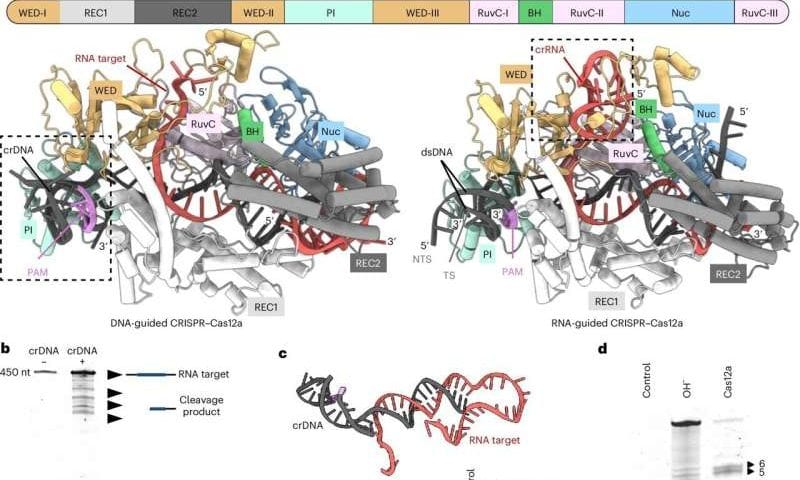
Utah State University chemist Ryan Jackson and his students study two lesser known CRISPR (Clustered regularly interspaced short palindromic repeats) systems known as Cas12a2 and Cas12a3. In contrast to the better known CRISPR-Cas9, which uses a guide RNA to locate a specific DNA sequence, Cas12a2 and Cas12a3 directly target RNA.

“We’re very focused on the basic research of understanding the structure and function of the CRISPR systems we study, and helping researchers around the world work through bottlenecks that enable them to pursue therapeutic applications,” says Jackson, R. Gaurth Hansen Associate Professor in USU’s Department of Chemistry and Biochemistry.

With doctoral student Kadin Crosby and master’s student Bamidele Filani, Jackson, along with collaborators in Europe, reports new findings about CRISPR-Cas12a3 in Nature.

Potential for new diagnostic tools

These discoveries could lead to more efficient and accurate diagnostic tools to rapidly detect COVID, influenza and RSV infections, individually or in combination, with a single test, in a single patient.

Jackson and his team are learning more about Cas12a2 and Cas12a3’s distinctive characteristics.

“Instead of making a single break in the bound target, as Cas9 does to DNA, RNA target binding by Cas12a2 and Cas12a3 changes the shape of a protein in a way that activates them to cut another nucleic acid target over and over again,” he says.

“When activated, Cas12a2 indiscriminately cleaves DNA, destroying all viral DNA, but collaterally killing the host cell as well. In contrast, Cas12a3 cleaves transfer ribonucleic acids, known as tRNAs, halting virus protein production, while sparing the DNA of host cells.”

That latter ability enables Cas12a3 to target tRNA in a very precise way. Jackson and his team are trying to harness that ability to detect and target specific pathogens.

How Cas12a3 targets tRNA

“tRNA is the lynchpin of protein synthesis,” Jackson says. “It functions as a translation device that can read code on RNA and act as a molecular bridge to link that code to the correct amino acid to allow protein production.”

Cas12a3 has the ability to disable tRNA’s translation ability.

“Cas12a3 can stop protein production in its tracks by chopping off a specific region of tRNA, called the ‘tail,” which contains the amino acid,” he says. “This is a very powerful and precise way to prevent a pathogen, including a virus, from replicating in a cell, without damaging the cell’s DNA.”

Jackson says Cas12a3’s ability to cleave tRNA tails is a newly discovered CRISPR immune response.

“We think being able to stop an invading pathogen, while leaving DNA unchanged could be a therapeutic breakthrough,” he says. “As we study these systems, we’re also discovering the enormous functional diversity in these bacterial defense mechanisms.”

Jackson adds Crosby and Filani played key roles in discovering and defining the specific functions of Cas12a3, and determining its ability to perform as a diagnostic tool.

Collaborators on the study include Chase Beisel at Germany’s Helmholtz Institute for RNA-based Infection Research in Würzburg and Dirk Heinz at the Helmholtz Center for Infection Research in Braunschweig, along with researchers at Jagiellonian University in Poland, the University of Strasbourg in France, the Freie University in Germany, the Robert Koch Institute in Germany, the University of Veterinary Medicine Austria and the Institute of Science and Technology Austria.