
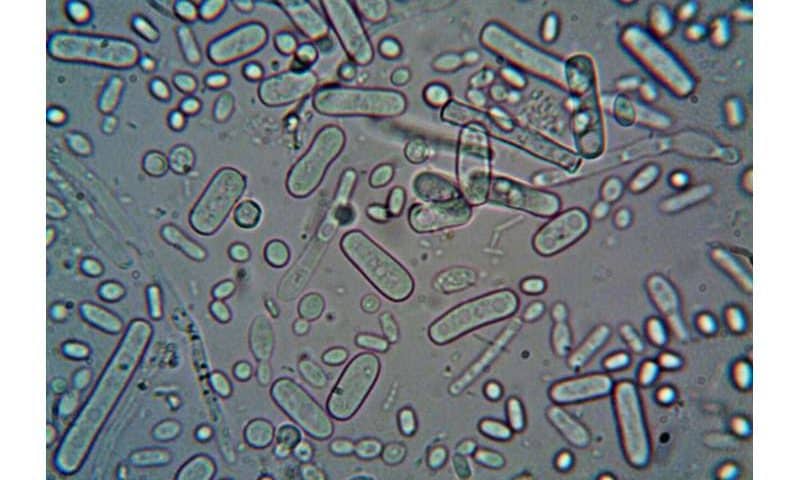
Researchers have developed a powerful new tool that can track how microbes spread between people with unprecedented precision, offering new ways to prevent infections and improve treatments in the future. The research, published April 24 in Nature Microbiology, describes how the new tool, called TRAnsmision Clustering of Strains (TRACS), uses genomics to distinguish between closely related strains of microbes.
In a collaboration between experts at the Peter MacCallum Cancer Center in Australia, the Wellcome Sanger Institute and the University of Oslo, researchers used the TRACS tool to map the transmission of the SARS-CoV-2 virus, the bacterium that causes pneumonia, Streptococcus pneumoniae, and the malaria parasite, Plasmodium falciparum, across different populations.
The team believes the TRACS tool will play an important role in infection prevention, outbreak response, and the development of treatments designed to help the human microbiome fight infection.
Being able to track the spread of disease-causing microbes, otherwise called pathogens, using genomics has become a major tool in public health and can help inform new ways to prevent transmission. Additionally, it can help us understand more about how lifestyle and environmental factors are involved in the transmission of these pathogens, and how they colonize the human microbiome.
Currently, genomic tools used to track multiple bacterial species at once do not have the speed and flexibility required for routine public health monitoring and can struggle to distinguish between samples transmitted recently and those transmitted years ago. Furthermore, it can be difficult to continuously add in new samples, making real-time surveillance difficult.
To address this, an international team developed TRACS, a highly accurate and easy-to-use algorithm that can distinguish between two closely related samples and tell whether they are likely to have come from a direct point of transmission or were acquired at the same source.
The TRACS algorithm identifies small genetic differences, known as single nucleotide polymorphisms (SNPs), and then analyzes these differences to estimate how closely related the pathogens are, and if they are likely to have recently been transmitted. This approach allows for the continuous integration of new samples, making it an ideal tool for accurately identifying transmission networks and ruling out transmission events in ongoing public health applications.
In this new study, the team used TRACS to map pathogen transmission networks across three different populations, all of which had different genomic data. They applied it to SARS-CoV-2 data from U.K. hospitals, deep population sequencing data of Streptococcus pneumoniae and single-cell genome sequencing data from malaria patients infected with Plasmodium falciparum. They found that the tool was able to identify different pathogens in one sample and infer where these were each transmitted.
They also used TRACS to study how microbes are passed from mothers to infants and found that one beneficial bacterium, Bifidobacterium breve, persisted in infants longer than previously recognized, something that previous methods have missed.
“Traditionally, this has been very difficult for us to achieve, yet it is incredibly important to know, as people can carry several slightly different versions or strains of the same species at once, which makes it challenging to understand how microbes move between individuals,” says Dr. Gerry Tonkin-Hill, first and corresponding author at the Peter MacCallum Cancer Center.
“Using this new technology, we can now overcome this challenge and gain a clearer picture of how microbes are shared between people. This will give us a better understanding of how microbes spread to help us prevent infection in vulnerable populations, like our cancer patients.”
“This research could support the development of new treatments that use beneficial microbes to improve health. By understanding exactly how microbes move between people and which of them are more likely to thrive in their microbiome, we could design better ways to increase helpful gut microbes and investigate whether there are ways to use these to help prevent infections, opening the door to safer health care environments and new microbiome-based therapies,” says Dr. Trevor Lawley, co-author from the Wellcome Sanger Institute.
“Genomic surveillance has greatly improved our understanding of how infections spread, and has allowed us to apply this knowledge to inform and develop new public health approaches. This new approach can take any complex sequenced samples of microbes, including bacteria, viruses, fungi, and parasites, and infer whether these came from a direct transmission or a shared source,” says Professor Jukka Corander, senior author from the Wellcome Sanger Institute and the University of Oslo.
“This is an incredible step forward. The method is both computationally more efficient and more accurate than existing methods and is a clear example of how genomics could be used to support public health,”