
Type 1 diabetes (T1D) is a lifelong autoimmune disorder where the immune system attacks islets, certain areas of the pancreas, and destroys cells that would otherwise produce insulin, a hormone crucial for regulating blood sugar levels. One emerging treatment is transplantation—replacing islets with healthy cells—but patients would have to take medication to subdue the immune system, so the body would not reject the therapy.
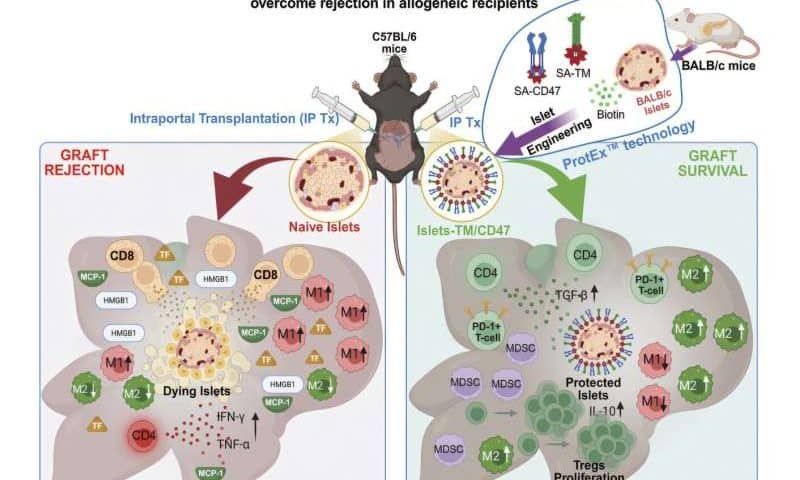
A recent study by researchers with the University of Missouri School of Medicine shows a potential way to protect the transplant without using immunosuppressive drugs. They found that modifying islets with immune-regulating molecules significantly enhanced the acceptance and survival of islet cells compared to unmodified cells. The findings are published in the journal JCI Insight.
“Immunosuppressant medications affect and weaken the whole body, so we instead focused on how we could improve our delivery of the transplanted islets,” said study author Haval Shirwan. “We provided islets with a protective shield consisting of two molecules that help the transplants evade rejection from the immune system, a solution that lengthens the survival of islet cells with minimal side effects.”
In a preclinical model, normal glucose (blood sugar) levels were established in over 72% of recipients of transplanted islets, without the need for insulin medication. The two molecules added to islets allowed cells to respond to glucose and secrete insulin naturally.
“We engineered islets with thrombomodulin and CD47. The first one prevents harmful inflammation that would otherwise contribute to early islet destruction, and the second sends a signal to immune cells that there is no threat and to ‘back off,'” added study author Esma Yolcu. “Transplanted islets engineered with both molecules had a far better survival rate than islets with only one.”
If future research trials succeed, this transplantation treatment could help patients with T1D manage their symptoms and eliminate the need for insulin shots.
“Approximately 2 million people in the United States have T1D, and according to several studies, this number will rise as the rate of disease increases,” Shirwan said. “While we still need to do more research confirming its safety and effectiveness in humans, this method is a promising way to stabilize T1D.”