
Water pollution caused by pharmaceuticals, pesticides and other organic contaminants is an increasing global issue, especially in regions with limited wastewater treatment infrastructure. A new doctoral thesis from Umea University in Sweden offers an innovative and sustainable solution by demonstrating how agricultural waste can be converted into effective materials for water purification.
In her chemistry research, Brigitte Mukarunyana demonstrates how biochars and hydrochars—carbon-based materials produced from biomass such as coffee husks, coffee pulp, wood and sugarcane residues—can effectively remove harmful contaminants from wastewater. The research combines advanced laboratory experiments with field studies to address real-world water pollution challenges.
“Wastewater bears our mark; biomass restores,” says Mukarunyana. “This research shows that locally available materials can become part of the solution to protect water resources and public health.”
She defends her thesis June 12 at Umea University.
Traps and adsorbs pollutants
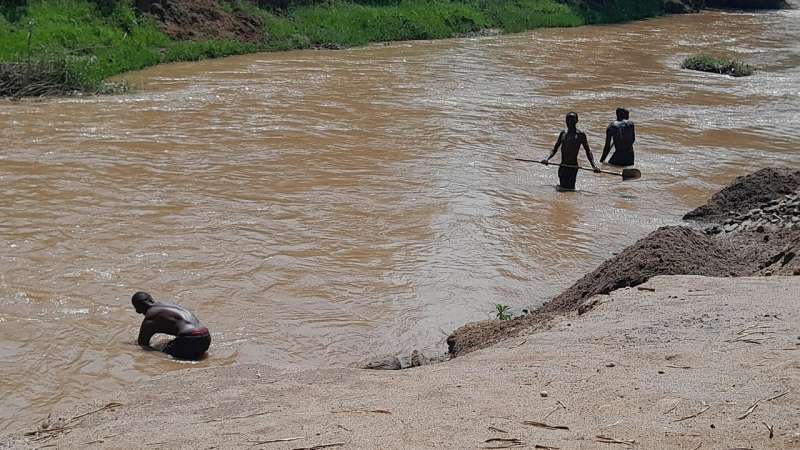
The work focuses on water systems in Rwanda, where rapid urbanization, agriculture and limited wastewater treatment contribute to widespread pollution. Field investigations revealed high levels of organic contaminants in both hospital wastewater and rivers. In hospital effluent, pharmaceutical concentrations reached 244,000 nanograms per liter, while river samples contained more than 50 different pharmaceutical compounds, alongside pesticides and plant-derived substances.
These patterns showed that urban areas are mainly affected by pharmaceutical pollution, while rural and agricultural regions are more affected by pesticides and natural organic compounds.
To address these challenges, the thesis investigates how agricultural waste can be transformed into water treatment materials through thermochemical processes such as pyrolysis and hydrothermal carbonization. The resulting biochars and hydrochars act as adsorbents, meaning they trap and retain contaminants from water.
Experiments using real wastewater demonstrated that these materials can remove 14% to 66% of pharmaceuticals, about 75% of pesticides and, in some cases, achieve complete removal of specific compounds such as polyphenols. Under optimal conditions, some materials reached removal efficiencies above 90%.
Reduces waste and costs
A key contribution of the research is explaining why these materials are effective. Their performance depends on several factors, including the type of biomass used, the production process, and the resulting surface structure and chemistry. Rather than being driven by a single factor, pollutant removal is governed by a combination of mechanisms such as chemical interactions, hydrophobic attraction and trapping within microscopic pores.
The study emphasizes the potential of transforming waste into a valuable resource, endorsing a circular approach in which agricultural byproducts are reused for environmental safety. This process reduces waste, lowers the cost of water treatment and creates opportunities for local production of purification materials.
It is particularly important for regions where centralized treatment systems are not feasible, as these materials can be produced locally and used in decentralized or small-scale applications.
The research, conducted at the Department of Chemistry at Umea University in collaboration with international partners, provides a foundation for future development of sustainable water treatment technologies. Continued work will focus on scaling up production, testing the materials in real-life systems and integrating them with existing treatment methods.