

Men are more likely to take risks in tricky situations than women, but whether there is an inherent biological reason behind it is a question researchers have been asking for quite some time. A popular theory suggests that higher levels of the hormone testosterone are what make men less risk-averse. A recent study, however, debunked this notion.
A review spanning dozens of studies involving more than 17,000 participants found no reliable link between testosterone and how much risk a person chooses to take. Rather than being driven by a single hormone, risk-taking seems to stem from a mix of biological, psychological, and social factors. A separate meta-analysis looking at sex differences found that testosterone’s link to risk-taking behavior is no stronger in men than in women. The findings are published in Neuroscience and Behavioral Reviews.
Testing the testosterone theory
Testosterone is the main male sex hormone and plays a key role in male development. It is primarily produced in the testicles and helps drive changes during puberty, such as a deeper voice, facial and body hair growth, and increased muscle strength. Although men naturally have higher levels of testosterone, women also produce it in their gonads, the ovaries. Both men and women need testosterone to maintain bone strength, energy levels, muscle growth, and healthy red blood cell production.
Many researchers have zeroed in on testosterone as a key driver of gender differences in risk aversion—a person’s tendency to choose safer options with predictable outcomes rather than riskier choices that may offer greater rewards but involve uncertainty. This behavior shapes decisions both large and small, from how fast we drive, where we invest our money, and what activities we seek out on holiday, to high-stakes choices in politics, international relations, and economic policy.
Given the far-reaching impact of risk-taking and aversion, scientists have spent years trying to decode this complex aspect of human behavior. While some pointed to social and cultural factors, others focused on the potential biological driver. However, the evidence on testosterone has been very inconsistent. Some studies linked higher testosterone to greater risk-taking, while others found no relationship at all, and some even found the opposite.
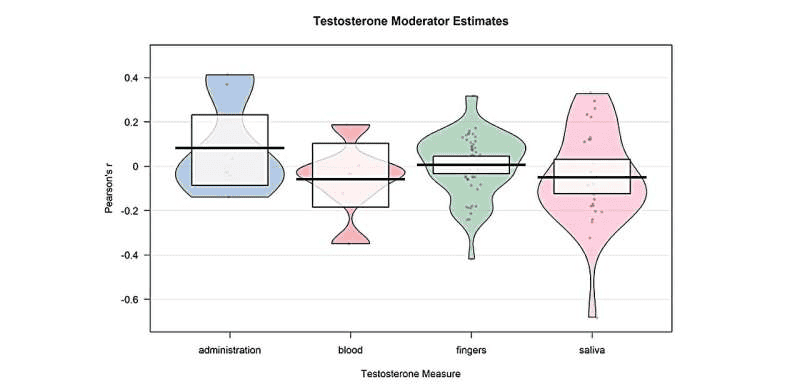
To make sense of the existing literature on this topic, the researchers conducted a meta-analysis of 52 studies involving 17,340 participants that examined both testosterone and risk-taking. The studies they included used a wide range of testosterone measurement methods, including direct approaches such as blood and saliva tests, as well as hormone administration. Across the included studies, risk-taking was assessed using gambling tasks, lottery games, and personality questionnaires.
A statistical method called multilevel random-effects meta-analysis was used to pool results across studies, accounting for differences in study design and the fact that many studies included multiple measurements. In addition, the researchers conducted a separate analysis to determine whether the findings differed between men and women or by task type.
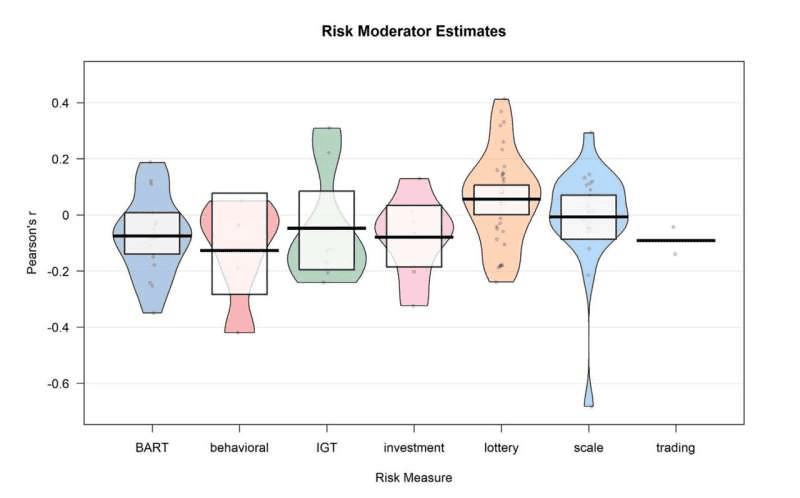
Even though men naturally have higher testosterone and often take more risks than women, testosterone does not explain this difference in behavior, as there was no clear association between the hormone and the behavior. The researchers noticed that a tiny link only appeared in studies that used lottery-style games, whereas other risk-taking measures showed no meaningful relationship. They also found that studies using direct measures of testosterone often reported no link between the hormone and risk-taking levels, whereas studies using indirect methods, such as finger-length ratios (an indicator of prenatal testosterone exposure), were more likely to suggest a possible association.
The results make it quite evident that risk-taking is not driven by hormones alone. The researchers suggest that risk-taking likely depends on a biopsychosocial framework, involving a combination of the situation at hand, how a person thinks and feels, and the specific demands of the task. The debate is likely to remain open until future studies use larger sample sizes, standardized hormone testing methods, and more consistent measures of risk-taking.