
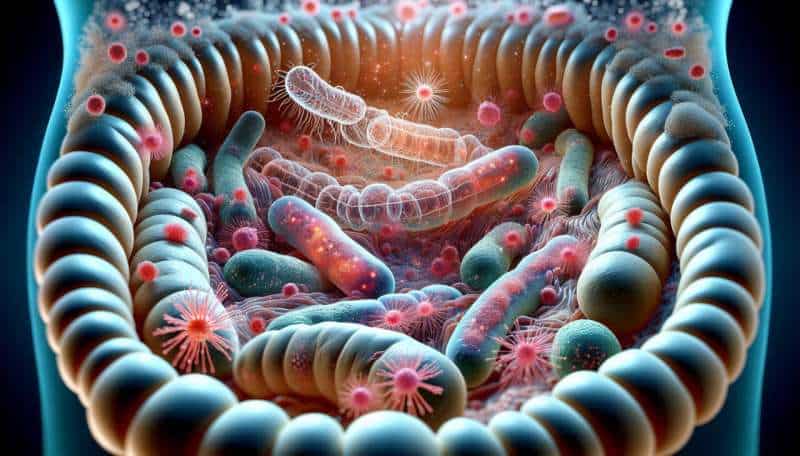
The gut microbiome has been a rising star in the world of health science over the last several years, garnering interest from both researchers and the general public. This is mostly due to its connection to general health and diseases, like type 2 diabetes and heart disease, as well as the fact that it is a modifiable element of human health. However, the science surrounding the fascinating world of gut microbes is still developing and there is much to learn.
A new study, published in Nature, has added significantly to our understanding of the human microbiome. The study team analyzed the gut microbiome, diet and health markers from over 34,500 people in the US and UK, and linked hundreds of specific gut microbe species to key indicators of health and diet. The data come from the Zoe PREDICT program in the UK and US, which is run by the microbiome testing company Zoe.
A new microbiome ranking system
The researchers used machine learning to link certain gut microbe species in 34,694 study participants to diet and common health risk factors such as BMI, triglycerides, blood glucose and HbA1c, as well as clinical markers that are intermediary measures of cardiometabolic health. Out of 661 non-rare microbial species, the researchers focused in on the 50 that were most favorably associated with good health and the 50 that were the most unfavorably associated with good health.
This process resulted in the development of the “ZOE Microbiome Health Ranking 2025” and “Diet Ranking 2025,” used to score microbes as either favorable or unfavorable for health on a scale of 0 to 1. Those closer to zero are considered positively correlated to the health markers and those closer to one are negatively correlated. This was done for all 661 microbes studied.
Linking gut bacteria to key health indicators
The ranking system identified hundreds of gut microbe species—described as species-level genome bins (SGBs) in the paper—significantly associated with health markers and diet quality. They found that favorable microbes were more common in people with lower BMI and fewer diseases, while unfavorable microbes were more common in those with obesity and disease. A part of the study focusing on BMI, used data from 5,348 healthy individuals, and divided them into three BMI categories; healthy weight, overweight and obese.
“Meta-analysis based on linear regression on single cohorts showed that individuals with healthy weight carried, on average, 5.2 more of the 50 favorably ZOE MB health-ranked SGBs than people with obesity,” the study team writes.
The team also assessed whether the ZOE MB health-ranked SGBs were more abundant in participants with a defined disease. Indeed, they found that people in the control group had higher favorably ranked gut microbes than people with disease, and that those with diseases had more unfavorably ranked gut microbes than those without disease.
Linking gut bacteria to diet
Dietary interventions were also found to increase favorable microbes and reduce unfavorable ones. The team analyzed data from two studies, referred to as ZOE METHOD and BIOME, in which participants either followed a personalized dietary intervention program (PDP) designed to improve the microbiome or took a prebiotic supplement. The microbiomes of these participants changed significantly by the end of the studies.
“The dietary intervention groups of both clinical trials that aimed at improving diet using different approaches (prebiotic blend for BIOME and PDP for METHOD) showed the highest number of significantly changing SGBs. Focusing on the most significant gut microbial SGBs with the largest change in relative abundance after dietary interventions, we found increasing Bifidobacterium animalis—a bacterium present in dairy-based foods and in the microbiome of people consuming larger amounts of them, an unknown Lachnospiraceae bacterium and R. hominis both previously associated with a vegan diet, and another unknown Lachnospiraceae bacterium linked to a vegetarian diet,” the authors explain.
In addition to linking known bacterial species to measures of health and diet, the team also discovered many key health-associated microbes that were previously uncharacterized species. Future studies can potentially describe these new species in more detail. And although this is an observational study, unable to definitively prove causation between microbes, diet and health, the new rankings can guide future research on causal links between these factors and also include more diverse populations and direct interventions.