
Food waste is a nagging problem that weighs heavily on global food production, distribution and sales industries—but an emerging generation of AI sensors is providing a raft of fresh solutions. The embrace of AI in food industries has been swift, which is why Flinders University researchers have worked with an international research team to build the first comprehensive overview of AI technologies involved in the food industry.
“Many examples of AI-integrated sensors are being used in the food industry for product safety, quality maintenance and optimized production efficiency,” explains Flinders University ARC Future Fellow Associate Professor Vi-Khanh Truong. “The review highlights the strong potential of AI-integrated sensing systems to reduce energy consumption, fuel usage and food waste across the supply chain.”
As an example, AI-assisted precision drying systems can identify optimal processing conditions in real time, significantly reducing excess energy consumption during food dehydration processes. Similarly, smart spoilage prediction systems can prevent premature disposal of food products, reducing both economic losses and greenhouse gas emissions associated with food waste.
“The global food supply chain faces an escalating need for monitoring systems that are not only accurate but also rapid, non-destructive and scalable. This is because traditional laboratory methods for assessing food quality and safety, such as gas chromatography, microbial plating and sensory panels, are often destructive, time-consuming, create bottlenecks that hinder real-time quality control, and require specialized personnel.”
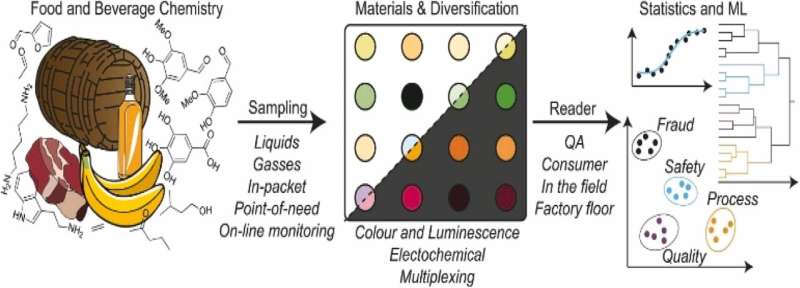
The researchers identified a broad range of intelligent sensing systems being integrated into the food industry, including AI-enabled optical sensors, hyperspectral imaging systems, electronic noses (e-noses), electronic tongues (e-tongues), Raman spectroscopy, FT-IR spectroscopy, microwave sensing platforms, IoT-integrated low-power sensors, graphene chemo-sensors, plasmonic sensors, and ML-assisted multisensory arrays.
“By enabling real-time monitoring and predictive analysis, these intelligent systems can optimize food processing conditions, reduce unnecessary transportation and storage losses, minimize refrigeration energy demand, and improve logistics efficiency,” says Associate Professor Truong.
The review, published in the Journal of Food Composition and Analysis, covered major AI frameworks including support vector machines (SVM), random forest, k-nearest neighbor (KNN), convolutional neural networks (CNNs), long short-term memory (LSTM) models, autoencoders, and ensemble learning systems used for food quality, spoilage detection, adulteration analysis and supply chain optimization.
Notable examples highlighted in the review include Raman spectroscopy combined with SVM achieving up to 99.6% accuracy for detecting milk adulteration, FT-IR spectroscopy integrated with AI models achieving 100% classification accuracy for edible oil authentication, and hyperspectral imaging with CNN models enabling early disease detection in peppers before visible symptoms appear.
The integration of low-power IoT sensors and TinyML edge-computing platforms is particularly important because these systems operate with minimal energy requirements while enabling continuous monitoring directly within storage, transport, and production environments.
“Collectively, these technologies support a more sustainable and resource-efficient food industry by reducing waste generation, lowering fuel and electricity consumption, and improving overall supply-chain sustainability.”
The review also discussed AI-assisted electronic nose systems capable of identifying coffee bean geographical origin with 97.5% accuracy, and machine-learning assisted spoilage prediction systems for meat, fish, fruits and dairy products.
These technologies demonstrate how AI can improve food safety, reduce waste, enhance traceability and enable real-time quality monitoring across the supply chain.
“The choice of machine learning models primarily determines regression error and predictive accuracy,” says Associate Professor Truong. “This work has demonstrated the capability of machine learning models to improve sensor response across various ambient conditions, including temperature, pH, humidity, and pressure.”
The wireless communication used alongside the machine learning-assisted sensor arrays has also enhanced network efficiency, optimized resource utilization and improved predictive analysis.
Associate Professor Truong now predicts a sharp increase in the combination of machine learning models and sensors used in the food industry, to further improve selections of targeted analysis and achieve full accuracy with fewer machine learning training cycles.
“Food sensors have been fabricated using various nanomaterials due to their excellent electrochemical properties, but we believe selection of these sensors can be improved to detect a greater number of possible analysis—and this will allow sensing systems to comprise multiple machine learning models to detect a wide range of contaminants in food materials.”