Blood test boosts Alzheimer’s diagnosis accuracy to 94.5%, clinical study shows

A protein lurking around in the blood can help with the accurate diagnosis of Alzheimer’s disease. In a recent study, researchers from Spain investigated how blood-based biomarkers, such as a protein called p-tau217, affect both the clinical diagnosis of Alzheimer’s and neurologists’ confidence in their diagnosis.

After following 200 consecutive new patients aged 50 and older who presented with cognitive symptoms, they found that a simple blood test measuring p-tau217 significantly improved diagnostic accuracy in routine clinical practice.

When relying solely on standard clinical evaluation, doctors correctly diagnosed Alzheimer’s in 75.5% of cases, but when incorporating blood test results, diagnostic accuracy increased to 94.5%. The findings are published in the Journal of Neurology.

Better path to Alzheimer’s diagnosis

Phosphorylated tau, or p-tau217, is a protein that naturally occurs in the brain and helps keep neurons, the cells that carry signals, stable and healthy. The trouble begins when this protein becomes abnormally phosphorylated and clumps together, forming tangles that disrupt communication between brain cells. Over time, this damage can impact brain function and lead to neurodegenerative conditions such as Alzheimer’s disease.

While p-tau217 is not considered the direct cause of Alzheimer’s, elevated levels in the blood are now recognized as one of the most accurate early warning signs of the disease.

In many parts of the world, the population is rapidly aging and so is the number of age-related diseases like Alzheimer’s and dementia. However, most of the standard ways to diagnose Alzheimer’s today, like expensive brain scans or invasive spinal taps, are costly, uncomfortable, and often hard for patients to access.

Scientists have long known that p-tau217 is a reliable biomarker for detecting early signs of Alzheimer’s, but most of these data come from highly controlled research labs. How well it works in everyday medical clinics and whether it truly boosts doctors’ confidence in their diagnoses remain less explored.

In this study, the researchers focused on both these factors in real-world medical settings. They followed patients who came in for general neurology consultations and to a specialized cognitive neurology unit with cognitive symptoms. Clinicians noted their initial diagnosis and how confident they felt about it, then reviewed the p-tau217 blood test results and recorded any changes.

The team found that after reviewing the p-tau217 results, diagnostic accuracy jumped by 19%. For about one in four patients, the blood test prompted doctors to change their diagnosis. Some people who were first believed to have Alzheimer’s turned out to have a different condition, while others who were thought to be experiencing normal aging were correctly identified as having Alzheimer’s. Also, the doctors’ confidence in their diagnoses rose from an average of 6.90 to 8.49 on a 10-point scale.

The p-tau217 tests proved to be effective across every stage of cognitive decline, be it early memory complaints or late-stage decline such as dementia. The findings show that this blood test could provide a more accurate and less invasive way to diagnose Alzheimer’s, potentially improving care for millions of people.

Patients want bigger benefits from statins before they consider taking them, finds new study

Heart disease remains one of the leading causes of death worldwide. To lower this risk, doctors prescribe statin drugs that reduce low-density lipoprotein (LDL) cholesterol, the type that can accumulate in the arteries and lead to heart attacks or strokes. More than 200 million people take statin drugs to protect their heart health.

Despite their well-established benefits, researchers have found that many people remain reluctant to use them. A recent study in JAMA Internal Medicine suggests that patients often expect two to three times more risk reduction than statins actually provide in clinical practice before they consider taking the medication daily.

A team of Japanese researchers surveyed 254 adults in the United States and 297 adults in Japan, all aged 40 to 75, who had never taken statins. They asked one simple question: how much would statins need to lower the risk of cardiovascular disease for them to feel the medication is worth taking?

Even at a moderate risk (10%) of developing a heart condition within the next 10 years, 42.9% of US adults and 42.4% of Japanese adults declined to take statins after knowing how effective the drug is and what side effects it can have. The researchers find these numbers concerning, as they believe gaps between what people expect and what clinical guidelines recommend may contribute to low statin adherence.

Removing the bad player

Statin drugs target and block the liver enzyme HMG-CoA reductase, which plays a pivotal role in the body’s natural cholesterol production. By inhibiting this enzyme, statins lower levels of bad LDL cholesterol and remove cholesterol from arterial plaque—a waxy buildup that forms inside the walls of arteries that can narrow blood vessels, restrict blood flow, and increase the risk of heart attacks.

Current guidelines from the American College of Cardiology and the American Heart Association recommend statins for people with a 10-year risk of heart disease or stroke of 7.5% or higher. Some experts even suggest considering treatment at even lower risks, around 3–5%. However, these guidelines on who should take statins are mostly based on expert recommendations, with little input from patients themselves.

Previous studies have found that even when people know the benefits and side effects of statins, many still hesitate to take them, thus creating a gap between what is needed for medical reasons and preferred by patients.

Understanding patient preference

In this study, the team set out to measure the gap more precisely using a metric called the smallest worthwhile difference (SWD)—a patient preference-focused metric that captures the minimum absolute risk reduction a person considers necessary to justify starting a treatment.

Participants from both countries, the US and Japan, were informed that, at present, most statins can lower the risk of cardiovascular disease by about 25% across different risk levels.

The survey revealed that at a very low baseline risk of 2%, 75.6% of US and 62.3% of Japanese participants said they would not take statins, even if the drug could reduce their risk to zero. This refusal dropped as risk increased to 10%, where ~42% declined statins in both the groups, and at 20% risk, it was 23.6% and 38.4% still refusing to take statin.

People in both low- and high-risk groups expected statins to cut their 10-year risk by at least 7.5 percentage points before they would consider taking them—that’s a 50–75% reduction, far above what the drugs actually deliver. However, as baseline risk increased, people were willing to accept a smaller benefit to take the medication.

The researchers suggest that SWD could help bring patient preferences into clinical guidelines and provide a clearer framework for shared decision-making between doctors and patients.

Specialized neuron populations in the mouse cortex coordinate to guide correct decisions, study suggests

For decades, neuroscientists have been trying to pinpoint the neural underpinnings of behavior and decision-making. Past studies suggest that specialized groups of neurons in the mammalian brain, particularly in the cortex, work together to support decision-making and behavioral choices.

Some cortical neurons project to specific regions in the brain. This essentially means that they send axons, projections that transmit electrical impulses from one cell to another, to other areas.

Some neuroscientists have hypothesized that neurons projecting to the same area form specialized “population codes,” coordinated activity patterns that collectively represent specific information.

Researchers at Harvard Medical School and University Medical Center Hamburg-Eppendorf (UKE) carried out a study involving mice aimed at testing this hypothesis and shedding new light on how this process unfolds.

Their findings, published in Nature Neuroscience, suggest that neurons in a region of the mouse brain, the posterior parietal cortex, which project to the same area, do in fact form specialized population codes. These codes were in turn found to be associated with the mice making correct decisions in behavioral tasks.

“Cortical neurons projecting to the same target area may form specialized population codes to transmit information, but whether and how they do so remains unclear,” Houman Safaai, Alice Y. Wang and their colleagues write in their paper.

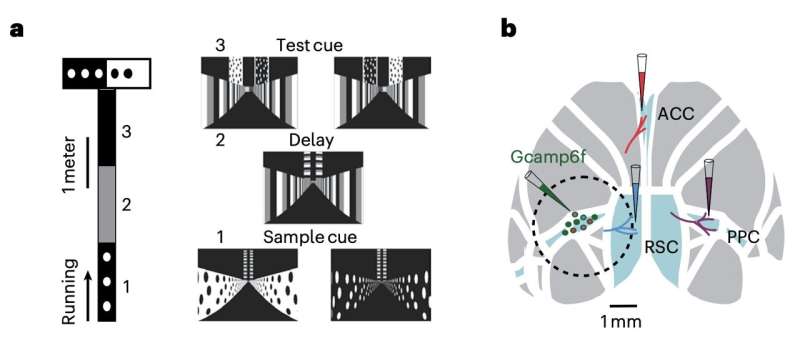
“We used calcium imaging in mouse posterior parietal cortex, retrograde labeling and statistical multivariate models to address this question during a delayed match-to-sample task in virtual reality.”

Exploring how neurons work together to guide decisions

To conduct their investigation, the researchers employed a combination of techniques, including calcium imaging, retrograde labeling and multivariate statistical models.

Calcium imaging is an experimental tool that can be used to track activity in specific regions of the brain, utilizing fluorescent indicators that light up when neurons fire. Retrograde labeling, on the other hand, is a technique to mark neurons based on where their axons end, and multivariate statistical models are analysis tools that can uncover interactions between several variables.

During the team’s experiment, the mice completed a memory-guided task that required them to choose how to behave within a virtual reality (VR) environment. The researchers tracked how the interactions between the mice’s cortical neurons changed when they made correct and incorrect choices.

“We found that neurons projecting to the same area have elevated pairwise activity correlations,” write Safaai, Wang and their colleagues. “These correlations are structured as information-limiting and information-enhancing motifs that shape interaction networks and collectively enhance information about the mouse’s choice beyond what is contributed by pairwise interactions.”

Probing the neural roots of decision-making

When they analyzed the data they collected, the researchers found that patterns of synchronized activity between neurons projecting to the same region predicted correct behavior. These neurons were found to form a network-like structure that made it easier to predict if the mice acted “correctly” in the VR-based task.

“This network structure is unique to subpopulations that project to the same target and was not observed in surrounding neural populations with unidentified projections,” write the authors.

“Furthermore, this structure is only present when mice make correct, but not incorrect, behavioral choices. Therefore, cortical neurons comprising an output pathway form a population code with a unique correlation structure that enhances population-level information to guide accurate behavior.”

This work could contribute to the understanding of how cortical neurons work together to guide choices and behavior. Future studies could further investigate the emergence of population codes observed by the researchers and its implications for decision-making.

Patients are more than participants: What meaningful engagement really looks like—and why it improves health research

When we talk about “patient engagement” in research, it can sound like a slogan on a grant application rather than something that changes people’s lives.

Across Canada and many other countries, funding agencies now ask researchers to involve patients in their studies. In theory, this should make health research more relevant, equitable and easier to apply in real-world care. In practice, however, engagement is often limited to asking a patient to review a document, join an advisory committee in name only, or attend a single meeting where decisions have already been made.

Patients are invited into the room—but not into the work.

My colleagues and I wanted to do something different.

Why women’s voices are missing from cardiac rehabilitation

Cardiovascular disease is the leading cause of death among women worldwide. Cardiac rehabilitation (CR)—secondary prevention programs that combine exercise, education and psychosocial support—can reduce deaths and hospitalizations and help people return to their lives after a heart event.

Yet women are consistently less likely than men to be referred to CR, to enroll, or to stay long enough to benefit. Many tell us that the programs and educational materials do not really feel “for them”: They see mostly male examples and images, language that does not reflect their lives and responsibilities, and limited acknowledgment of their emotional experiences.

If women’s realities are absent from the way we teach and support them, it is not surprising that participation remains low.

From feedback to co-design

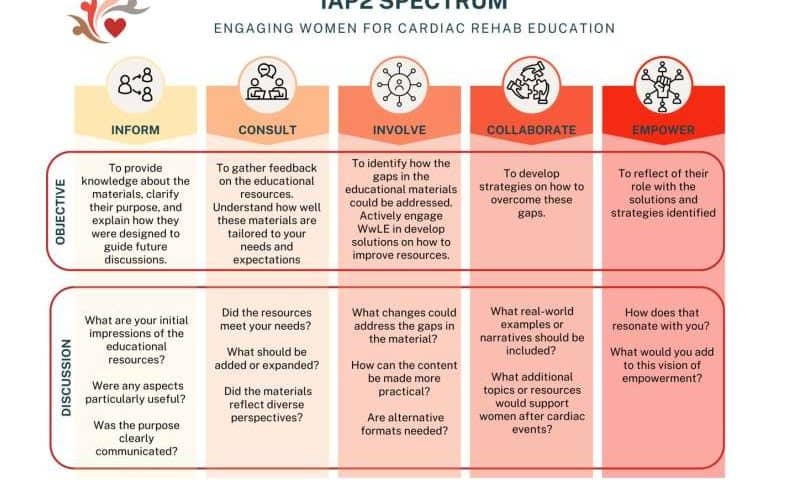
In our recent study published in Patient Education and Counseling, we invited 11 women with lived experience of cardiovascular disease—some who had attended CR, some who had not—to help refine the educational resources in the Cardiac College for Women, a web-based curriculum developed at University Health Network (Toronto, Canada).

Instead of a single consultation, we organized five online workshops over several months. We used established engagement frameworks to deliberately shift power over time. A woman with lived experience co-facilitated the workshops. Participants were compensated for their time, received summaries between sessions, and saw their suggestions incorporated in real time. We measured engagement using validated scales, but perhaps the most powerful evidence came from their comments: Many said they felt heard, respected and “part of something that will help other women like me.”

What patients changed—and why it matters

The women identified five priority areas for improvement:

  1. Accessibility. Navigation needed to be clearer, the language simpler, and the fonts larger. They asked for audio options and visual summaries for those who struggle with long blocks of text.
  2. Storytelling. Facts alone were not enough. Hearing how other women coped with fear, fatigue and caregiving responsibilities made information memorable and motivating.
  3. Representation. They wanted more diverse images and stories—different ages, ethnicities, body types, family structures and financial realities—so that more women could “see themselves” in the materials.
  4. Multiple formats. Some preferred short videos, others printable handouts, others audio they could listen to while walking. A single format could never serve everyone.
  5. Reaching more women. They proposed practical ways to share the materials: through cardiologists and family doctors, community organizations, pharmacies and social media.

These are not minor cosmetic tweaks. They reshape who the materials are for, how they are experienced and which women are most likely to benefit.

Tokenism vs. meaningful engagement

What made this process feel different from tokenistic engagement?

  • Real influence. Participants saw their ideas adopted—sometimes word-for-word. They were not just “advising”; they were co-creating.
  • Psychological safety. Ground rules were set together. People could disagree respectfully. Emotions were acknowledged, not brushed aside.
  • Continuity. We met repeatedly, built relationships, and checked back after each session. Engagement was a process, not a one-time event.
  • Recognition. Women were compensated, named as contributors, and invited to continue as partners in future work.

Meaningful engagement takes more time and planning than sending a survey link. But it also produces better science. The women highlighted issues we would not have identified on our own and suggested solutions that were practical and grounded in real life.

Beyond our project: A better way to do health research

Our study focused on women in cardiac rehabilitation, but the lessons are broader.

When patients are treated as partners rather than passive subjects, research questions become more relevant, interventions are easier to implement, and findings are more likely to reduce inequities rather than reinforce them. This is especially important for groups that have historically been excluded from research—women, racialized communities, people with lower incomes or disabilities.

For researchers, the challenge is to move from “checking the engagement box” to genuinely sharing power:

  • Invite patients in early, when there is still room to shape the project.
  • Be transparent about what they can influence—and follow through.
  • Create structures (like repeated workshops, clear roles and fair compensation) that support ongoing, respectful collaboration.

Patients are more than participants. They are experts in their own lives and essential partners in designing health systems that truly work for everyone. Our experience with women living with heart disease shows that when we listen carefully—and are prepared to act on what we hear—research becomes not only more just, but more effective.

Specific brain activity patterns predict greater control over drinking behavior, study finds

Alcohol use disorder (AUD) is among the most widespread substance use disorders (SUDs) worldwide, characterized by an impaired ability to control the intake of alcohol. For many years, psychologists and psychiatrists have linked this disorder with a shift away from so-called goal-directed behaviors.

Goal-directed, or model-based, behaviors are those behaviors that are guided by learned mental models of actions and their consequences. Individuals with AUD and other disorders that entail the uncontrolled use of substances have often been hypothesized to engage more in model-free (i.e., habit-driven behavior) than goal-directed behaviors.

Interestingly, however, past studies did not always find evidence supporting this hypothesis. In contrast, some findings suggest that some drinking patterns are in fact associated with goal-directed behavior.

Researchers at the NeuroCure Clinical Research Center, Humboldt University of Berlin and other institutes in Germany recently carried out a study aimed at further exploring the link between AUD and goal-directed behavior, specifically focusing on the neural signatures of this type of behavior. Their findings, published in Translational Psychiatry, suggest that model-based behaviors and their associated neural signatures are linked to a greater control over the consumption of alcohol.

“A shift away from goal-directed, model-based behavior is commonly viewed to characterize AUD,” Claudia Ebrahimi, Milena P.M. Musial and their colleagues wrote in their paper.

“Previous research, however, has failed to demonstrate differences between individuals with and without AUD regarding goal-directed control, operationalized as model-based behavior. Instead, findings suggest associations between model-based behavior and alcohol consumption patterns, but mechanistic insights into the link between model-based behavioral and neural signatures and longitudinal, real-life control over alcohol intake remain elusive.”

Exploring the real-life impact of drinking intentions

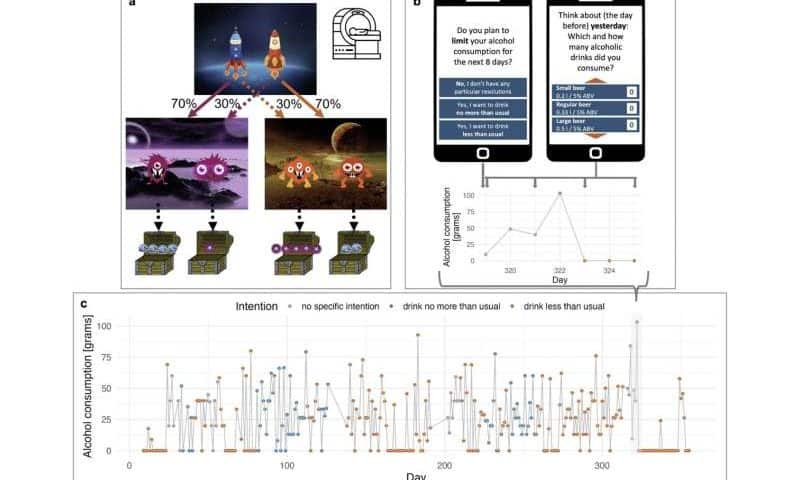
To perform their experiments, the researchers recruited 67 individuals diagnosed with AUD, 20 of whom were women. The study participants were asked to complete a task that assessed how they made decisions.

As they completed this task, the team recorded activity in their brain, particularly in two regions known as the hippocampus and ventral striatum, using functional magnetic resonance imaging (fMRI). This is a widely used and noninvasive imaging technique that measures activity in specific brain regions by detecting changes in blood flow and oxygen levels.

The participants were then asked to honestly record how much alcohol they consumed daily and how much they intended to consume on a weekly basis, via a dedicated smartphone-delivered survey. Their smartphone survey responses spanned across an average of 272 days.

“We investigated whether experimentally assessed model-based behavior can prospectively predict intentional reduction of alcohol consumption in daily life,” wrote the authors.

“We related behavioral and neural markers of model-based behavior during a sequential decision-making task in participants with AUD to long-term smartphone-based ecological momentary assessments of daily alcohol intake and weekly alcohol consumption intentions over a period of up to one year.”

Activity patterns linked with better drinking control

Overall, the researchers found that people who were more guided by a model-based pattern of behavior were more likely to successfully limit their drinking if they intended to do so. In addition, they uncovered activity patterns in the hippocampus and ventral striatum that predicted a greater control over drinking behaviors.

“Model-based behavior and its neural signatures in bilateral hippocampus and ventral striatum moderated how well individuals succeeded in aligning their alcohol consumption with their drinking intentions during the following year,” wrote the authors.

“Specifically, AUD participants with higher model-based behavior and associated stronger hippocampal and weaker ventral striatal learning signals exhibited enhanced capacity to intentionally reduce their alcohol consumption in everyday life. These findings provide evidence for the ecological validity of computational concepts of goal-directed behavior and suggest specific treatment targets for individually tailored interventions to regain control over alcohol use.”

Ebrahimi, Musial and their colleagues gathered valuable new insight that could help to improve existing psychological models of AUD. In the future, their findings could pave the way for various follow-up studies, while also potentially informing the development of new personalized interventions aimed at reducing the consumption of alcohol or limiting the uncontrolled consumption of other substances.

Inhibiting a master regulator of aging regenerates joint cartilage in mice

An injection that blocks the activity of a protein involved in aging reverses naturally occurring cartilage loss in the knee joints of old mice, a Stanford Medicine-led study has found. The treatment also prevented the development of arthritis after knee injuries mirroring the ACL tears often experienced by athletes or recreational exercisers. An oral version of the treatment is already in clinical trials with the goal of treating age-related muscle weakness.

Samples of human tissue from knee replacement surgeries—which include both the extracellular scaffolding, or matrix, in the joint as well as cartilage-generating chondrocyte cells—also responded to the treatment by making new, functional cartilage.

The study results suggest it may be possible to regenerate cartilage lost to aging or arthritis with an oral drug or local injection, rendering knee and hip replacement unnecessary.

The treatment directly targets the cause of osteoarthritis, a degenerative joint disease that affects 1 of every 5 adults in the United States and is estimated to cost about $65 billion in direct health care costs each year. No drug can slow down or reverse the disease; the primary treatments for osteoarthritis are pain control and surgical replacement of the affected joints.

The protein, 15-PGDH—termed a gerozyme due to its increase in prevalence as the body ages—is a master regulator of aging. Gerozymes, identified by the same researchers in 2023, also drive the loss of tissue function. They are a major force behind age-related loss of muscle strength in mice.

Blocking the function of 15-PGDH with a small molecule results in an increase in old animals’ muscle mass and endurance. Conversely, expressing15-PGDH in young mice causes their muscles to shrink and weaken. The gerozyme has also been implicated in the regeneration of bone, nerve and blood cells.

In each of these tissues, regeneration is due to increases in the proliferation and specialization of tissue-specific stem cells. However, chondrocytes change their patterns of gene expression to assume a more youthful state without the involvement of stem cells.

“This is a new way of regenerating adult tissue, and it has significant clinical promise for treating arthritis due to aging or injury,” said Helen Blau, Ph.D., professor of microbiology and immunology. “We were looking for stem cells, but they are clearly not involved. It’s very exciting.”

Blau, who directs the Baxter Laboratory for Stem Cell Biology and is the Donald E. and Delia B. Baxter Foundation Professor, and Nidhi Bhutani, Ph.D., associate professor of orthopedic surgery, are the senior authors of the research, which will be published online Nov. 27 in Science. Instructor of orthopedic surgery Mamta Singla, Ph.D., and former postdoctoral scholar Yu Xin (Will) Wang, Ph.D., are the lead authors of the study. Wang is now an assistant professor at the Sanford Burnham Institute in San Diego.

‘Dramatic regeneration’

“Millions of people suffer from joint pain and swelling as they age,” Bhutani said. “It is a huge unmet medical need. Until now, there has been no drug that directly treats the cause of cartilage loss. But this gerozyme inhibitor causes a dramatic regeneration of cartilage beyond that reported in response to any other drug or intervention.”

There are three main types of cartilage in the human body. One, elastic cartilage, is soft and flexible and forms structures like the outer ear. A second, fibrocartilage, is dense and tough, absorbing shock in areas such as between the spinal vertebrae. The third, hyaline cartilage, is smooth and glossy, providing a low-friction surface for lubrication and flexibility in joints like the ankles, hips, shoulders and parts of the knee. Hyaline cartilage—also known as articular cartilage—is the cartilage most commonly affected by osteoarthritis.

Osteoarthritis occurs when a joint is stressed by aging, injury or obesity. The chondrocytes begin to release pro-inflammatory molecules and to break down collagen, which is the primary structural protein of cartilage. When collagen is lost, the cartilage thins and softens; the accompanying inflammation causes the joint swelling and pain that are hallmarks of the disease.

Under normal circumstances, articular cartilage rarely regenerates. Although some populations of putative stem or progenitor cells capable of generating cartilage have been identified in bone, attempts to identify similar populations of cells in the articular cartilage have been unsuccessful.

Previous research from Blau’s lab has shown that a molecule called prostaglandin E2 is essential to muscle stem cell function. 15-PGDH degrades prostaglandin E2. Inhibiting 15-PGDH activity, or increasing levels of prostaglandin E2, supports the regeneration of damaged muscle, nerve, bone, colon, liver and blood cells in young mice.

Blau, Bhutani and their colleagues wondered if 15-PGDH might also play a role in aging cartilage and joints. They wanted to find out if a similar pathway contributes to cartilage loss from aging or in response to injury. When they compared the amount of 15-PGDH in the knee cartilage in young versus old mice, they saw that, as in other tissues, levels of the gerozyme increased about two-fold with age.

They next experimented with injecting old animals with a small molecule drug that inhibits 15-PGDH activity—first into the abdomen, which affects the entire body, then directly into the joint. In each case, the knee cartilage, which was markedly thinner and less functional in older animals as compared with younger mice, thickened across the joint surface. Further experiments confirmed that the chondrocytes in the joint were generating hyaline, or articular, cartilage, rather than less-functional fibrocartilage.

“Cartilage regeneration to such an extent in aged mice took us by surprise,” Bhutani said. “The effect was remarkable.”

Addressing ACL tears

Similar results were observed in animals with knee injuries like the ACL tears that frequently occur in people participating in sports such as soccer, basketball and skiing that require sudden pivoting, stopping or jumping. While the tears can be surgically repaired, about 50% of people develop osteoarthritis in the injured joint within about 15 years.

The researchers found that a series of injections twice a week for four weeks of the gerozyme inhibitor after injury dramatically reduced the chance that osteoarthritis develops in the mice. Animals treated with a control drug had levels of 15-PGDH that were twice as high as in their uninjured peers, and they developed osteoarthritis within four weeks.

The animals treated with the gerozyme inhibitor also moved more typically and put more weight on the paw of the affected leg than did untreated animals.

“Interestingly, prostaglandin E2 has been implicated in inflammation and pain,” Blau said. “But this research shows that, at normal biological levels, small increases in prostaglandin E2 can promote regeneration.”

A closer investigation of the chondrocytes in the joints of old mice and young mice showed that old chondrocytes expressed more detrimental genes involved in inflammation and the conversion of hyaline cartilage to unwanted bone, and fewer genes involved in cartilage development.

The researchers were also able to pinpoint subcategories of old chondrocytes that change their patterns of gene expression after treatment. One, which expresses 15-PGDH and genes involved in cartilage degradation, decreased in prevalence from 8% to 3% after treatment. Another, which does not express 15-PGDH but does express genes involved in the production of fibrocartilage, also decreased in prevalence: from 16% to 8% after treatment.

A third population, which does not make 15-PGDH and which expresses genes involved in hyaline cartilage formation and the maintenance of the extracellular matrix necessary for its function, increased in prevalence after treatment from 22% to 42%. The findings indicate an overall shift in gene expression after treatment to a more youthful cartilage composition—without the involvement of stem or progenitor cells.

Finally, the researchers studied human cartilage tissue removed from patients with osteoarthritis undergoing total knee replacements. Tissue treated with the 15-PGDH inhibitor for one week exhibited lower levels of 15-PGDH-expressing chondrocytes and lowered cartilage degradation and fibrocartilage genes than control tissue and began to regenerate articular cartilage.

“The mechanism is quite striking and really shifted our perspective about how tissue regeneration can occur,” Bhutani said. “It’s clear that a large pool of already existing cells in cartilage are changing their gene expression patterns. And by targeting these cells for regeneration, we may have an opportunity to have a bigger overall impact clinically.”

Blau added, “Phase 1 clinical trials of a 15-PGDH inhibitor for muscle weakness have shown that it is safe and active in healthy volunteers. Our hope is that a similar trial will be launched soon to test its effect in cartilage regeneration. We are very excited about this potential breakthrough. Imagine regrowing existing cartilage and avoiding joint replacement.”

Researchers from the Sanford Burnham Prebys Medical Discovery Institute contributed to the work.

NAD⁺ restores memory in Alzheimer’s disease models by correcting RNA errors

Alzheimer’s disease (AD), the leading cause of dementia, affects nearly 40 million individuals globally, resulting in a gradual loss of memory and independence. Despite extensive research over the past decades, no treatments have been found that can halt or reverse the progression of this devastating disease.

In AD, a major contributor to neuronal dysfunction is the protein tau. Tau typically plays a crucial role in keeping the internal structure of neurons stable, much like train tracks help trains stay on course. However, in some diseases, tau undergoes abnormal modifications and starts to aggregate, disrupting this transport system, thus leading to neuronal damage and subsequent memory loss.

An international team of researchers has reported a new mechanism by which boosting the natural metabolite NAD⁺ can protect the brain from the degeneration associated with AD. Their paper, titled “NAD⁺ reverses Alzheimer’s neurological deficits via regulating differential alternative RNA splicing of EVA1C,” is published in Science Advances.

The team is led by Associate Professor Evandro Fei Fang from the University of Oslo and Akershus University Hospital, Norway, in collaboration with Professor Oscar Junhong Luo from Jinan University, China, and Associate Professor Joana M. Silva from the University of Minho, Portugal.

How NAD⁺ supports brain health

NAD⁺ (nicotinamide adenine dinucleotide, oxidized form) is a vital metabolite involved in energy metabolism and neuronal resilience in the body. It normally declines with age and especially in various neurodegenerative diseases.

“Preliminary studies have shown that supplementation with NAD⁺ precursors, such as nicotinamide riboside (NR) or nicotinamide mononucleotide (NMN), can offer therapeutic benefits in AD animal models and early clinical trials. However, the molecular mechanisms behind these benefits remain largely unclear,” first author Alice Ruixue Ai says.

The new study reveals that NAD⁺ works through a previously unidentified RNA-splicing pathway. This pathway is regulated by a protein called EVA1C, which plays an essential role in the process of RNA splicing. RNA splicing allows a single gene to produce multiple isoforms of a protein, and one isoform may show distinctive effects from the other isoforms. Its dysregulation is one of the most recently acknowledged risk factors for AD.

The researchers discovered that when NAD⁺ levels are increased, EVA1C helps correct mistakes in RNA splicing. This restoration process improves the function of hundreds of genes, many crucial for brain health, which can help reverse the neurodegenerative damage caused by tau.

Cross-species validation from worms to mice to the human brain

To demonstrate the impact of this mechanism, the researchers used a comprehensive approach that included computer predictions and validation in different animal models, including worms, mice, as well as human brain samples.

They first identified age-related changes in RNA splicing in a specific type of worm. They found that adding NAD⁺ could correct the splicing issues caused by the toxic tau protein. In mice with tau-related mutations, NAD⁺ supplements improved RNA splicing, restored brain function, and enhanced memory performance.

“Notably, we found when the EVA1C gene was knocked down, these benefits were lost, confirming that EVA1C is essential for NAD⁺-mediated neuroprotection,” Associate Professor Evandro Fei Fang-Stavem says.

Aligned with these animal studies, EVA1C levels were significantly reduced in brain cells from people with early AD.

Using AI to uncover the mechanism

To further investigate how EVA1C works, the team used an AI-driven platform to predict how proteins interact with one another, analyzing structural, sequential, and evolutionary data from millions of proteins.

This analysis revealed that NAD⁺ promotes a specific form of EVA1C that efficiently binds to essential proteins, which are central to protein folding and clearance. This connection links metabolic homeostasis, RNA splicing processes and protein management, three processes that are critically impaired in AD.

Towards new Alzheimer’s treatments

By establishing the connection between NAD⁺ and EVA1C, this study lays the groundwork for the development of new therapies and optimization of NAD⁺ augmentation strategies in humans.

“We propose that maintaining NAD⁺ levels could help preserve neuronal identity and delay cognitive decline, paving the way for combination treatments to enhance RNA splicing,” Ai says.

Removing toxic proteins before they can damage motor neurons

University of Wollongong (UOW) scientists have developed a breakthrough therapy that clears toxic proteins from nerve cells—a discovery that advances the work of the late Professor Justin Yerbury and could transform the treatment of motor neuron disease (MND).

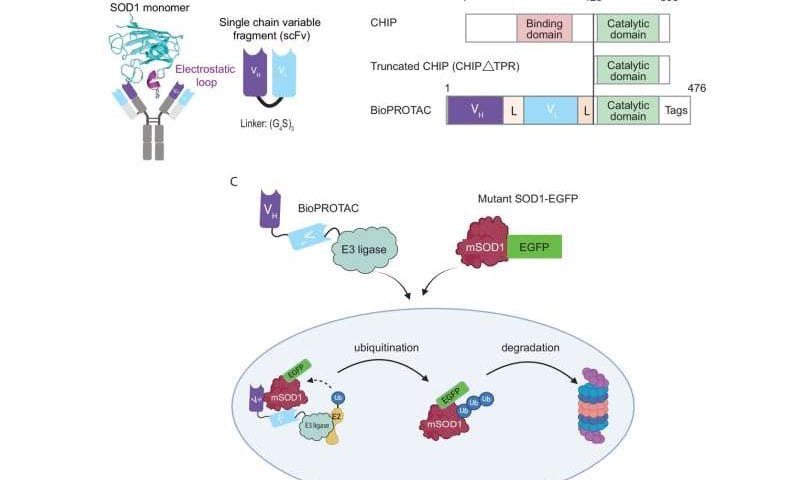
The proof-of-concept study, published in Nature Communications and led by Dr. Christen Chisholm from UOW’s Molecular Horizons, unveils a therapeutic designer molecule, MisfoldUbL, that targets and removes toxic misfolded SOD1 (superoxide dismutase 1) proteins from cells. SOD1 is an antioxidant enzyme that plays a crucial role in protecting cells from damage caused by superoxide radicals. About 35% of people with inherited MND in Australia have SOD1 gene mutations that cause more frequent misfolding.

“In MND, proteins misfold more frequently and the cell’s degradation systems become overwhelmed and stop working properly. The misfolded protein can then accumulate, forming clumps or ‘aggregates’ and over time, this accumulation damages and eventually kills motor neurons, leading to gradual muscle weakness, paralysis and death,” Dr. Chisholm said.

“We wanted to design a therapy that could help the cells get rid of harmful misfolded SOD1 before it could accumulate into aggregates. To do this, we needed a way to identify the misfolded protein in the sea of cellular proteins. Once identified, we needed a way to feed misfolded SOD1 into the cell’s degradation systems.”

Developed with industry partner ProMIS Neurosciences, Misfold UbL acts like a protein recycling tag. It attaches to misfolded SOD1 proteins and directs the cell’s waste-disposal system to break them down before they form clumps. In tests on mice, the treatment slowed symptom development, protected motor neurons in the spinal cord and preserved muscle connections compared to untreated animals.

The project was initially led by the late Professor Justin Yerbury. Professor Yerbury, who lost his own battle with MND in 2023, was a carrier of the SOD1 gene mutation and dedicated much of his career to understanding its role in the disease’s development and progression. Early in her Ph.D., Dr. Chisholm took the helm of this project following Professor Yerbury’s death.

Researchers from UOW’s Yerbury Lab who were co-authors on the research included Dr. Jeremy Lum, lead author Dr. Christen Chisholm, Professor Heath Ecroyd and Dr. Luke McAlary.

Dr. Chisholm, a former high school science teacher, had been friends with Professor Yerbury for many years. A mother of three young children, she was inspired by Professor Yerbury to change careers and join his lab to help him continue his research following his MND diagnosis.

“This research is the result of years of dedicated effort by many amazing scientists, all inspired by Justin and driven to advancing our understanding of MND and how to treat it,” Dr. Chisholm said. “I am especially honored that Justin entrusted his idea to me to develop and I’m so proud and grateful to all the people who helped me bring his idea to fruition.”

The project was undertaken by researchers from UOW’s Yerbury Lab in collaboration with MND researcher Professor Neil Cashman.

AI tool uncovers genetic blueprint of the brain’s largest communication bridge

For the first time, a research team led by the Mark and Mary Stevens Neuroimaging and Informatics Institute (Stevens INI) at the Keck School of Medicine of USC has mapped the genetic architecture of a crucial part of the human brain known as the corpus callosum—the thick band of nerve fibers that connects the brain’s left and right hemispheres. The findings open new pathways for discoveries about mental illness, neurological disorders and other diseases related to defects in this part of the brain.

The corpus callosum is critical for nearly everything the brain does, from coordinating the movement of our limbs in sync to integrating sights and sounds, to higher-order thinking and decision-making. Abnormalities in its shape and size have long been linked to disorders such as ADHD, bipolar disorder, and Parkinson’s disease. Until now, the genetic underpinnings of this vital structure had remained largely unknown.

In the new study, published in Nature Communications, the team analyzed brain scans and genetic data from over 50,000 people, ranging from childhood to late adulthood, with the help of a new tool the team created that leverages artificial intelligence.

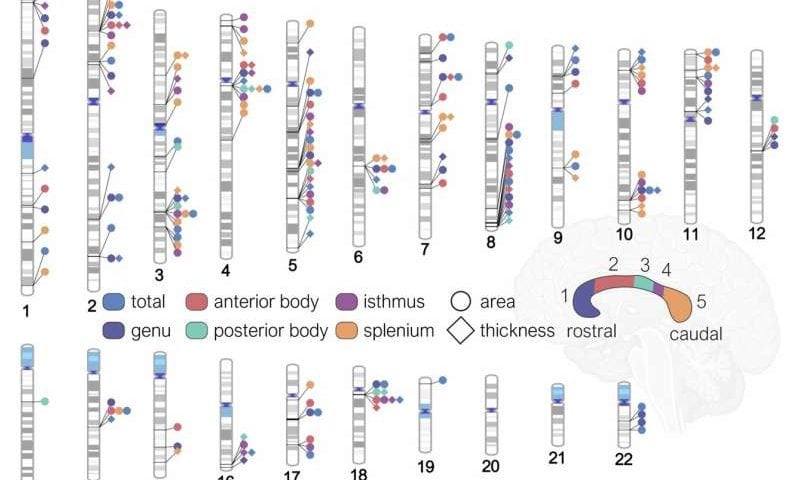
“We developed an AI tool that finds the corpus callosum in different types of brain MRI scans and automatically takes its measurements,” said Shruti P. Gadewar, co-first author of the study and research specialist at the Stevens INI. Using this tool, the researchers identified dozens of genetic regions that influence the size and thickness of the corpus callosum and its subregions.

“These findings provide a genetic blueprint for one of the brain’s most essential communication pathways,” said Ravi R. Bhatt, Ph.D., co-first author of the study and a postdoctoral scholar at the Stevens INI’s Imaging Genetics Center. “By uncovering how specific genes shape the corpus callosum and its subregions, we can start to understand why differences in this structure are linked to various mental health and neurological conditions at a molecular level.”

The study revealed that different sets of genes govern the area versus the thickness of the corpus callosum—two features that change across the lifespan and play distinct roles in brain function. Several of the implicated genes are active during prenatal brain development, particularly in processes like cell growth, programmed cell death, and the wiring of nerve fibers across hemispheres.

“This work demonstrates the power of using AI and large-scale databases to uncover the genetic factors driving brain development,” said Neda Jahanshad, Ph.D., associate professor of neurology and senior author. “By linking genetics to brain structure, we gain critical insight into the biological pathways that may underlie psychiatric and neurological diseases.”

Notably, the study found genetic overlap between the corpus callosum and the cerebral cortex—the outer layer of the brain responsible for memory, attention, and language—as well as with conditions such as ADHD and bipolar disorder.

“These connections underscore that the same genetic factors shaping the brain’s communication bridge may also contribute to vulnerabilities for certain disorders,” Jahanshad added.

Arthur W. Toga, Ph.D., director of the Stevens INI, emphasized the broader implications of this research, stating, “This study is a landmark in understanding how our brains are built. It not only sheds light on normal brain development but also helps us identify new avenues for diagnosing and potentially treating disorders that affect millions worldwide.”

The researchers have made their new AI-based tool publicly available to accelerate future discoveries. The software, developed at the Stevens INI, uses advanced machine learning to identify and measure the corpus callosum from MRI scans automatically. This approach allows scientists to analyze brain structure at an unprecedented scale and level of precision, reducing years of manual work to just hours.

The Stevens INI has become a global leader in applying artificial intelligence to neuroscience, developing tools that are freely shared with the research community. By combining massive datasets with cutting-edge computational methods, the institute is transforming how scientists study brain health and disease.

“Artificial intelligence is revolutionizing brain research, and Stevens INI is at the forefront of that revolution,” said Toga. “By pioneering AI tools and making them widely available, we’re empowering scientists around the world to unlock new discoveries about the brain far faster than ever before.”

Analysis of 14 million children finds COVID-19 infection poses greater heart complication risk than vaccination

A new study shows children and young people face long-lasting and higher risks of rare heart and inflammatory complications after COVID-19 infection, compared to before or without an infection. Meanwhile, the COVID-19 vaccination was only linked to a short-term higher risk of myocarditis and pericarditis.

The study is the largest of its kind in this population, and is published in The Lancet Child and Adolescent Health. It was led by scientists at the Universities of Cambridge and Edinburgh, and University College London, with support from the BHF Data Science Center at Health Data Research UK.

Principal author Dr. Alexia Sampri, University of Cambridge, said, “Our whole-population study during the pandemic showed that although these conditions were rare, children and young people were more likely to experience heart, vascular or inflammatory problems after a COVID-19 infection than after having the vaccine—and the risks after infection lasted much longer.”

The research team uncovered these findings by analyzing linked electronic health records (EHRs) for nearly 14 million children in England under the age of 18 between 1 January 2020 and 31 December 2022, covering 98% of this population.

During this period, 3.9 million children and young people had a first COVID-19 diagnosis. And 3.4 million had a first COVID-19 BNT162b2 (Pfizer–BioNTech) vaccine, the main vaccine used in 5–18-year-olds during the study period.

All personal information that could identify individuals had been stripped away, and approved researchers accessed this data entirely within the NHS England Secure Data Environment (SDE), a secure data and analysis platform.

The study looked at short- and long-term risks of rare complications including arterial and venous thrombosis (clots in blood vessels), thrombocytopenia (low levels of platelets in the blood), myocarditis or pericarditis (inflammation of the heart and its surrounding tissue respectively), and inflammatory conditions after COVID-19 diagnosis or vaccination.

After a first COVID-19 diagnosis, risks of the five conditions studied were highest in the first four weeks and, for several conditions, stayed higher for up to 12 months, compared to children and young people without or before a diagnosis.

In contrast, after COVID-19 vaccination, the team only saw a short-term higher risk of myocarditis or pericarditis in the first four weeks, compared to children and young people without or before vaccination. After that, the risk returned to the same level as the start of the study period.

Over six months, the research team estimated that COVID-19 infection led to 2.24 extra cases of myocarditis or pericarditis per 100,000 children and young people who had COVID-19. In those who were vaccinated, there were only 0.85 extra cases per 100,000 children and young people.

Previous research showed that children and young people diagnosed with COVID-19 are at a higher risk of developing conditions like myocarditis, pericarditis, and thrombocytopenia, compared to their peers who hadn’t had a COVID-19 diagnosis.

While many studies show that COVID-19 vaccines can help children to avoid severe illness and hospitalization, some also report rare cases of myocarditis in young people shortly after receiving a COVID-19 vaccine, particularly for mRNA-based vaccines.

However, there hasn’t been any research directly comparing the longer-term risks of both COVID-19 diagnosis and vaccinations in children and young people until now.

Co-author Professor Pia Hardelid, UCL and National Institute of Health and Care Research Great Ormond Street Hospital Biomedical Research Center, said, “Parents and caregivers have faced difficult choices throughout the pandemic. By building a stronger evidence base on both infection and vaccination outcomes, we hope to support families and health care professionals to make decisions grounded in the best available data.”

Co-author Professor Angela Wood, University of Cambridge and Associate Director at the BHF Data Science Center, said, “Using electronic health records from all children and young people in England, we were able to study very rare but serious heart and clotting complications, and found higher and longer-lasting risks after COVID-19 infection than after vaccination.

“While vaccine-related risks are likely to remain rare and short-lived, future risks following infection could change as new variants emerge and immunity shifts. That’s why whole-population health data monitoring remains essential to guide vaccine and other important public health decisions.”

Co-author Professor William Whiteley, University of Edinburgh and Associate Director at the BHF Data Science Center, said, “Parents, young people, and children need reliable information to make decisions about their health. Data from hospitals and GP practices are an important part of the picture because they tell us all what has happened to people looked after in the NHS.

“Here we have shown that during the pandemic, risks of myocarditis and inflammatory illnesses were low for children and young people, and that they were less after COVID-19 vaccination than after COVID-19 infection.”