
Global survey reveals obesity hidden in normal BMI contributing to metabolic disorders

A multinational team of researchers has discovered that over 20% of adults with a normal BMI range experience levels of abdominal obesity that puts them at higher risk of hypertension, diabetes, high total cholesterol, and elevated triglycerides.

Cardiometabolic disorders rank among the leading causes of death and disability worldwide. Over the past three decades, cardiovascular disease cases rose from 271 million to 523 million, with disability-adjusted life-years nearly doubling.

Abdominal obesity, especially visceral fat, disrupts metabolic processes via inflammatory pathways that contribute to insulin resistance, dyslipidemia, high blood pressure, and impaired glucose regulation. Diabetes affected an estimated 828 million adults in 2022.

BMI often fails to capture actual fat distribution, and studies have reported greater cardiovascular risk and mortality among individuals with normal BMI but higher waist circumference.

In the study, “Cardiometabolic Outcomes Among Adults With Abdominal Obesity and Normal Body Mass Index,” published in JAMA Network Open, researchers used a cross-sectional design to investigate the global prevalence of normal-weight abdominal obesity and its association with cardiometabolic outcomes.

Data came from the World Health Organization Stepwise Approach to Surveillance of Noncommunicable Disease Risk Factors (WHO STEPS) surveys in 91 countries between 2000 and 2020, including 471,228 participants aged 15 to 69 years across Africa, the Americas, the Eastern Mediterranean, Europe, Southeast Asia, and the Western Pacific.

Abdominal obesity was defined as high waist circumference (≥80 cm in women; ≥94 cm in men). Normal-weight abdominal obesity combines normal BMI (18.5–24.9) with high waist circumference. The main outcomes were hypertension, diabetes, high total cholesterol, and high triglycerides. Measurements were via standardized interviews, physical body measures, and biochemistry.

Across the global dataset, abdominal obesity was associated with several behavioral and metabolic factors. Individuals with larger waist circumferences were more likely to report low fruit and vegetable intake (odds ratio [OR] 1.22) and physical inactivity (OR 1.60). Clinically, those with abdominal obesity but a normal body mass index showed higher odds of hypertension (OR 1.29), diabetes (OR 1.81), high total cholesterol (OR 1.39), and high triglycerides (OR 1.56).

Intriguingly, higher education trended toward higher odds of the presence of abdominal obesity, with primary education (OR 1.53) and secondary or higher education (OR 2.38) raising the risk compared with no formal schooling. Africa was the lone exception with secondary and higher education associated with lower odds (OR 0.64).

Across the pooled sample, 21.7% of participants with normal BMI had abdominal obesity, ranging from 15.3% in the Western Pacific region to 32.6% in the Eastern Mediterranean region. Lebanon showed the highest country-level prevalence at 58.4%, and Mozambique the lowest at 6.9%.

Adults with a normal BMI but enlarged waist circumference faced higher odds of adverse metabolic conditions compared with peers of normal BMI without abdominal obesity. Hypertension, diabetes, high total cholesterol (OR 1.39), and high triglycerides showed globally significant increases.

A few regional exceptions were discovered as high total cholesterol was not observed in the Americas, high triglycerides were not found in Europe and hypertension did not rise in the Western Pacific.

The authors conclude that relying solely on BMI may be insufficient to identify high-risk individuals with normal-weight abdominal obesity.


Invisible wounds of the Ohio tornadoes: The mental health crisis after the storm

In early 2024, central Ohio faced one of its worst tornado seasons in history—66 confirmed tornadoes in less than five months.

But the most lasting damage wasn’t only to homes or power lines. It was to people’s mental health—especially among low-income residents in Franklin County who were already struggling to make ends meet.

The human cost behind the storms

My colleagues and I at Clemson University set out to understand how these disasters affected the emotional well-being of those with the fewest resources to recover. Using surveys from over 500 residents and in-depth interviews with 20 community members, we found a clear pattern: those who suffered the most physical and financial damage also faced the highest levels of anxiety, depression, and post-traumatic stress disorder (PTSD).

Tornadoes don’t just destroy buildings—they unravel stability

For many participants, every storm warning brought fear and dread. “Every time there’s a storm, I get really anxious. I worry about the kids,” one mother told us.

Others described isolation and financial strain as the biggest triggers for their mental health struggles. Rising utility bills and property repairs drained already tight budgets, while disrupted transportation and housing instability deepened their sense of helplessness.

Our data showed that people who experienced the most damage were two to three times more likely to report severe symptoms of anxiety and depression. Nearly 40% exhibited signs of PTSD—double the rate of those less affected. These aren’t abstract numbers; they represent people losing sleep, feeling unsafe in their own homes, and worrying that the next tornado season will bring something even worse.

Coping, resilience, and small acts of strength

Amid these struggles, we also witnessed resilience. Family and community networks played a crucial role. Many relied on relatives, churches, and food pantries to share resources and emotional support. Some found strength in mindfulness or faith-based routines; others turned to less healthy coping mechanisms, such as substance use, when mental health services were out of reach.

These stories highlight a difficult truth: coping mechanisms are shaped by access. Without affordable counseling or community support, stress can easily transform into chronic anxiety or depression. Yet, where community bonds were strong, people reported greater hope and emotional stability, even when their material losses were significant.

What communities and policymakers can do

Our findings suggest that preparing for future disasters must go beyond rebuilding physical infrastructure—it must also include building psychological resilience. Local governments and community organizations can take practical steps:

Expand access to affordable mental health care, including telehealth and mobile counseling units.
Offer community-led resilience workshops on stress management and emergency preparedness.
Improve risk communication, ensuring that warnings are timely, consistent, and actionable for residents with limited resources.

Support financial relief programs, such as utility and rent assistance during extreme weather seasons.
If these steps are integrated into disaster preparedness planning, communities can not only survive the next storm—but emerge stronger from it.

The bigger picture: Climate, inequality, and the future of mental health

What we saw in Franklin County is part of a larger national trend. As climate change fuels more frequent and intense weather events, the people hit hardest are those with the fewest resources to adapt or recover. Low-income families often live in older, poorly insulated homes, with limited access to insurance or savings.

When disasters strike, the emotional burden compounds quickly—worrying about rent, repairs, and safety becomes a constant cycle of stress.

Our study adds to growing evidence that climate resilience must include mental health resilience. If communities are not emotionally and psychologically prepared, recovery efforts risk deepening existing inequalities. Mental health must become a core pillar of climate adaptation—not an afterthought.

A call to listen: What survivors taught us

What stood out most in our interviews wasn’t just the hardship—it was the honesty and humanity of the stories people shared. Many participants told us they had never been asked how the storms affected their mental health before. Listening to them revealed a powerful truth: healing begins when people feel heard.

Disaster research often focuses on data, but behind every percentage point of anxiety or depression is a person rebuilding their life while holding their family together. As researchers, policymakers, and citizens, we must ensure that these voices guide how we design recovery programs. True resilience starts with empathy, and empathy begins with listening.

Why this matters now

Climate-related disasters are intensifying across the U.S., and their psychological toll will grow unless we address these social and economic inequities. My research shows that mental health recovery after disasters is not just a medical issue—it’s a matter of social justice.

By understanding how storms affect our minds as much as our landscapes, we can design fairer, more compassionate systems for resilience.

A less invasive, more effective method to analyze immunotherapy efficacy

Immunotherapy has been one of the most promising advancements in cancer treatment. However, consistency in immunotherapy treatment effectiveness remains a formidable challenge. Now, Cancer Center at Illinois member Kun Wang, Binbin Wang, a post-doctoral researcher at the National Cancer Institute, and Robert Saddawi-Konefka, a physician-scientist at MD Anderson Cancer Center (formerly at UCSD) are taking the guesswork out of cancer treatments through a predictive model for determining immunotherapy treatment effectiveness.

The researchers have introduced a blood-based liquid biopsy model, called the Liquid Biomarker of Immunotherapy Outcomes (LiBIO) score, which allows researchers to predict how likely patients are to respond to immune checkpoint blockade (ICB) drugs, an immunotherapy treatment.

The work is published in the journal Nature Communications.

“Immunotherapy is a promising cancer treatment strategy that tunes the immune system to recognize and attack cancer cells,” said Kun Wang, assistant professor of comparative biosciences and bioengineering (affiliated). “It has become an important treatment option for patients with head and neck cancer; however, not all patients benefit, and researchers still lack a reliable, non-invasive biomarker to predict response.”

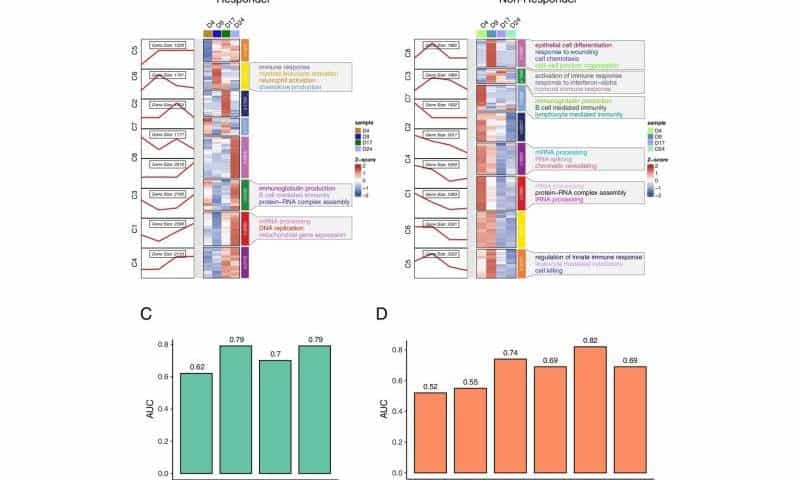
Researchers used a mouse model of head and neck squamous cell carcinoma (HNSCC) and utilized liquid biopsies to continuously track changes in the mice’s immune system before and after the implementation of ICB treatment. It was found that an early increase in specific cancer-fighting immune cells (effector memory T cells and B cells) was strongly correlated with a positive response to ICB treatment.

“We identified an early post-treatment time point as optimal for assessing treatment response,” Wang said. “This led to the identification of a gene signature set reflecting effector memory T and B cell populations linked to immunotherapy response at this critical time point, serving as a potential liquid biomarker.”

The LiBIO score has a much higher success rate in determining treatment effectiveness compared to previous biomarkers and has been successful in many other forms of cancer including breast cancer, lung cancer, and melanoma.

“This biomarker can help identify patients who are more likely to benefit from immunotherapy, thereby improving treatment efficacy and reducing the burden of unnecessary treatment,” Wang said. “Because it is blood-based, it also offers a non-invasive way to monitor treatment progress at the molecular level, which is especially valuable for real-time clinical decision-making.”

With the promising outcome of this mouse model, the next step is bringing the use of LiBIO scores to human patients in clinical trials. Researchers are hopeful that human trials are not too far in the future, though there is no definitive timeline.

“My collaborator and friend, Dr. Robert Saddawi-Konefka, who is also a co-first author of the paper, is an exceptional physician–scientist at MD Anderson Cancer Center,” said Wang. “He is currently working on a proposal and collaborating with other physicians to initiate human trials based on this research.”

Despite uncertainties and current limitations in this line of research, scientists remain optimistic about what the use of the LiBIO score means for the future of immunotherapy in the treatment of several types of cancers.

“While we found that the combination of effector memory T cells and B cells, and even their TCR and BCR repertoires, can be predictive of immunotherapy response, the underlying reason why B cells enhance T cell-mediated responses remains unclear,” said Wang.

“We aim to investigate the interactions between B cells and T cells to uncover the mechanism behind this synergy. Understanding this could enable the development of combination immunotherapies designed to strengthen their interaction and improve treatment outcomes.”

Mitochondrial potassium channels regulate heat production in brown adipose tissue, paving path for new obesity therapies

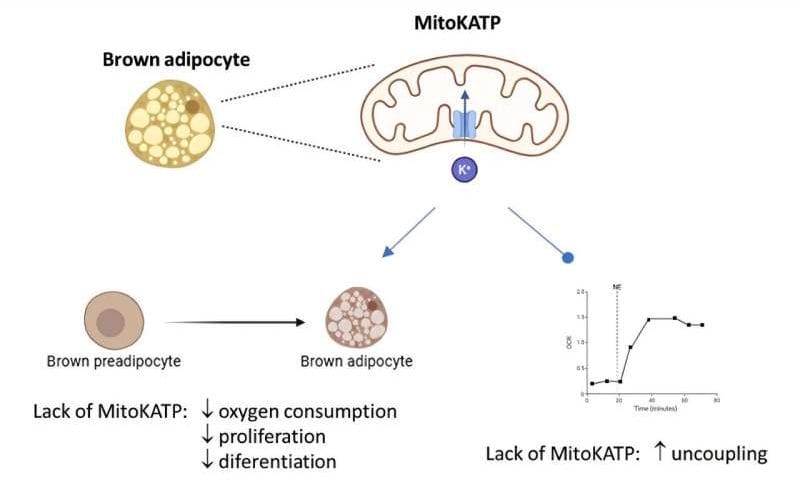
A study conducted by researchers at the Center for Redox Processes in Biomedicine (Redoxoma) has shown that ATP-sensitive mitochondrial potassium channels (MitoKATP) are involved in both the development of brown fat cells and the activation of mitochondrial uncoupling in these cells, a process that dissipates energy in the form of heat.

“We discovered that for brown fat cells to produce heat efficiently, the mitochondrial potassium channel must be closed,” explains Osvaldo Rodrigues Pereira Júnior, a researcher at Redoxoma. “This is the first time this phenomenon has been reported, revealing a previously unknown component of thermogenic activation.”

Brown adipose tissue, also known as brown fat, is one of the main factors responsible for maintaining body temperature in mammals by producing heat through a process called non-shivering thermogenesis. It consumes large amounts of energy to do this, making it a promising target for therapeutic strategies against obesity. Understanding how brown fat is activated may pave the way for new ways to regulate energy expenditure and promote metabolic health.

Pereira Júnior developed the study during his master’s degree at the Energy Metabolism Laboratory at IQ-USP, under the guidance of Professor Alicia Kowaltowski of IQ-USP.

The research is published in the American Journal of Physiology-Cell Physiology.

Thermogenic activation

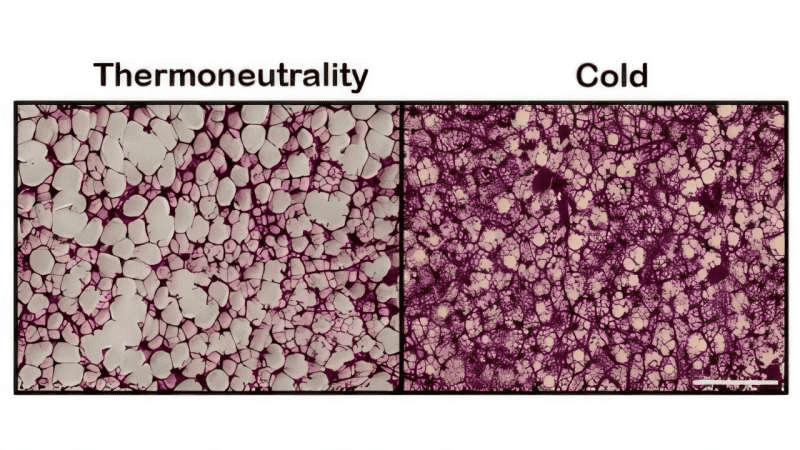
The study showed that in mice, exposure to cold and adrenergic stimulation, i.e., the action of hormones typical of the response to cold and stress, modulates the levels of the MitoKATP channel in brown adipose tissue.

To better understand the function of this channel, the researchers removed the gene that encodes an essential subunit of MitoKATP in human preadipocytes, which are precursor cells of adipose tissue. They observed a decrease in oxygen consumption, reduced cell proliferation, and difficulty in the differentiation of these precursors into mature adipocytes. In mouse cell lines, the absence of the same protein compromised cellular respiration in the precursor stage but not in already differentiated cells.

The most surprising data came from mature adipocytes, however. The researchers observed an increase in oxygen consumption when they inhibited the MitoKATP channel, suggesting that closing the channel is necessary for brown adipose tissue thermogenesis to reach maximum efficiency.

This observation was confirmed in mitochondria isolated from mice treated with a compound that activates specific adrenergic receptors in brown fat. Under these conditions, inhibiting MitoKATP also increased oxygen consumption linked to thermogenesis.

According to Kowaltowski, the study’s results provide two pieces of complementary evidence for the importance of closing the MitoKATP channel in activating thermogenesis.

“In addition to observing that cells with the channel closed generate more heat, we also saw that in animals in a condition that stimulates heat production, the channels were more closed,” the professor comments.

She points out that these two findings converge on the same conclusion: “At the same time that the tissue is being activated to generate heat, the channel closes. This indicates that there’s some type of signaling within the cell that leads to this ideal situation for heat generation. These are two different ways that demonstrate the importance of closing this channel to generate maximum heat.”

Living near toxic Superfund sites linked to aggressive breast cancer

Breast cancer is the second leading cause of cancer death among women, according to the American Cancer Society. Now, three recent studies by researchers at Sylvester Comprehensive Cancer Center, part of the University of Miami Miller School of Medicine, have uncovered links between breast cancer, Superfund sites and social adversity.

Even more alarming, a National Institutes of Health study states that some especially aggressive forms of breast cancer that are resistant to treatment, such as triple-negative breast cancer, are on the rise. More than 300,000 people in the United States are diagnosed with breast cancer every year, making up about 15.5% of all annual cancer diagnoses.

The rise in breast cancer cases—particularly aggressive, hard-to-treat types—highlights the need to examine potential environmental factors contributing to these unsettling trends. Along those lines, in Florida, the presence of 52 active Superfund sites has become a focus, prompting members of Sylvester’s Community Advisory Committee to raise awareness and connect with the cancer center about these issues.

“Members of our community raised concerns that where they lived was making people sick,” said Erin Kobetz, Ph.D., M.P.H., an epidemiologist and associate director for community outreach and engagement at Sylvester and the Judy H. Schulte Senior Endowed Chair in Cancer Research. “Overwhelmingly, the people who were speaking up about this lived in a neighborhood relatively close to a Superfund site. There’s a growing body of evidence that living in neighborhoods close to these sites is associated with poor health outcomes.”

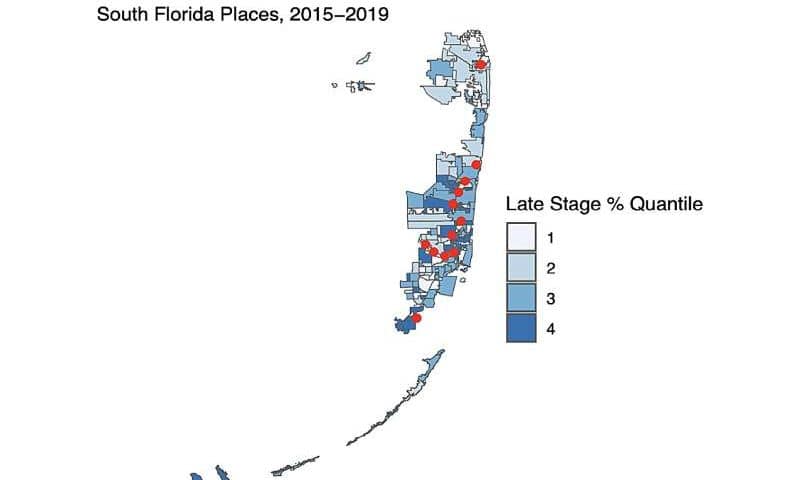
Although health and Superfund sites have been studied for decades, ties between environmental degradation and pollution and breast cancer remain under-researched, Dr. Kobetz said. So, she set up a multidisciplinary team of physicians, basic scientists and epidemiologists to dive in and study breast cancer and proximity to Superfund sites in Florida. Using Sylvester’s SCAN360 data portal, her team was able to retrieve granular data of South Florida’s neighborhood characteristics and cancer risks.

Breast cancer and Superfund sites

The first study examined more than 21,000 cases of breast cancer in Florida diagnosed from 2015 to 2019. Kobetz and her co-authors wondered whether proximity to a Superfund site was related to whether breast cancer was metastatic. The researchers found that living in the same census tract as at least one Superfund site raised the likelihood of metastasized breast cancer by about 30%.

The researchers then turned to specifically study triple-negative breast cancer (TNBC) and found that living in proximity to a Superfund site is also associated with increased risk for this aggressive subtype of breast cancer. Kobetz and her colleagues wanted to further explore the ties between TNBC and a certain pollutant, particulate matter 2.5 (PM2.5), which is a pollutant smaller than 2.5 microns. They report that higher exposure to PM2.5 leads to higher risk of TNBC in South Florida.

These two studies were published in Scientific Reports and Cancer Epidemiology, Biomarkers & Prevention. Together, they highlight the risk that simply living close to a Superfund site may pose in terms of breast cancer.

“These studies, as well as federal funding priorities, give an increasing emphasis on the role of the environment in health outcomes,” Kobetz said. “We need to better appreciate how environmental conditions may be driving variability in cancer outcomes.”

Biomarkers in tumors

Clinicians and researchers are concerned about environmental factors in a patient’s health journey, but there’s still a lot to learn about how those factors may be influencing diseases at the molecular level.

That’s why Aristeidis Telonis, Ph.D., a research assistant professor of biochemistry and molecular biology at the Miller School, wanted to dig into what might leave a chemical fingerprint in patients, a biomarker or even shape the progression of cancer.

The team, co-led by Kobetz, analyzed breast cancer samples from 80 patients in the Miami area. They went deeper than merely genetic testing of the DNA; they also checked the instruction notes (epigenome) and the real-time messages (RNA) that show how the DNA is being put into action.

The researchers then compared the genetic biomarkers to a composite measure of neighborhood context, and elements known to influence health outcomes. They observed that patients from neighborhoods with fewer health-promoting resources were more likely to exhibit these biomarkers and experience more aggressive forms of breast cancer.

“This deprivation index is very strongly associated with more aggressive breast cancers,” Telonis said. “It’s a simple, but very important correlation.” The study is published in Cancer Epidemiology Biomarkers and Prevention and is among the first to do a deep dive into these associations with molecular events inside a tumor, he said. The findings open the door to highly personalized care, with treatment plans that can best address the specific tumor conditions that a patient presents.

“The goal is that when a patient comes in, the doctor not only assesses the tumor characteristics, but also considers the patient’s resources and what that may mean molecularly,” Telonis said. “Eventually, that should help inform treatment.”

Community first for a healthy future

Kobetz stressed that this work was in direct response to the community’s concerns.

“We have a signal, and we’re compelled and encouraged by our Community Advisory Committee to pursue it,” Kobetz said. “The community had a perspective, and now we have empirical and scientific data to suggest that their concerns may be valid. These studies are the first puzzle pieces that will help us figure out what we should be focusing on next.”

Unlocking the molecular puzzle of exercise: Research maps 20 years of progress

We’ve long known that regular exercise builds muscle, strengthens the heart, and lifts our mood, but a new paper shows the benefits go even further—physical activity doesn’t just improve the body, it rewires it on a molecular level, reshaping how our systems function from the inside out.

In a piece published in Nature Reviews Endocrinology, leading ACU researchers Professor John Hawley and Dr. Nolan Hoffman unpacked two decades of progress in the field of human exercise metabolism.

Shedding light on the intricate molecular networks that underpin the wide health benefits of physical activity, it offers a blueprint of landmark research over the past 20 years and key future research directions that could change how we understand and harness exercise for disease prevention and treatment.

Professor John Hawley, a world-leading expert in exercise bioenergetics and the director of ACU’s Mary MacKillop Institute for Health Research, said ongoing research shows exercise has the potential to be as effective as medicine in preventing and treating a range of disease.

“Exercise is not just about physical performance, but a powerful biological intervention that affects our health at the deepest molecular level,” Professor Hawley said.

“For chronic conditions like heart disease, obesity, and type 2 diabetes, these findings suggest a future where exercise is integrated into health care as a form of preventive medicine.”

In this paper, Professor Hawley and Dr. Hoffman discuss how molecular biology approaches and the new omics-based technologies have advanced understanding of exercise’s impact at the molecular and cellular levels.

“Twenty years ago, we knew exercise was beneficial for metabolic health, but we didn’t know much about the complex molecular networks underlying these health benefits,” Dr. Hoffman said.

“Research over the past two decades has started to map these molecular blueprints of exercise, identifying thousands of molecules that become activated during different modes of physical activity (endurance versus strength training) and increasing our understanding of how they interact and contribute to the health benefits of exercise.”

They highlight three key studies that have shaped the field, each revealing new layers of complexity on how skeletal muscle and molecules in the bloodstream respond to exercise.

Dr. Hoffman said these studies are changing how we think about the molecular puzzle of exercise, why movement matters and how it can remodel molecular networks in not just our muscle but also our bloodstream.

“They show that exercise triggers a specific timeline of genes and proteins in muscle, orchestrates metabolic and immune systems in the bloodstream, and releases molecular ‘packages’ into the circulation that communicate with various cells and organs around the body, showing that exercise’s effects extend far beyond just muscle contraction.”

There is future potential to use molecular biomarkers identified to predict how well someone will respond to exercise based on their genetic and metabolic profiles to help delay, treat or prevent obesity and other cardiometabolic conditions.

At ACU’s Melbourne campus, this research is supported by cutting-edge instrumentation from molecular technologies to the human metabolic chamber—the only one of its kind in the southern hemisphere.

The newly opened metabolic chamber allows researchers to conduct precise studies on energy expenditure and metabolic responses to add to the growing body of research on human exercise metabolism.

PA-915 molecule shows long-lasting antidepressant effects without common side effects in mice

Depression and anxiety disorders are among the most widespread mental health disorders, with estimates suggesting that they affect around 264 million and 284 million people worldwide, respectively. Depression is a mood disorder characterized by persistent sadness and a loss of interest in everyday activities, while anxiety disorders are marked by high levels of nervousness, worry and fear, either in specific situations or generalized.

Today, there are several treatment options for both depression and anxiety disorders, including both pharmacological drugs and specific types of psychotherapy. Yet available therapeutic strategies are not effective for all affected individuals; thus, identifying alternative treatments could be highly advantageous.

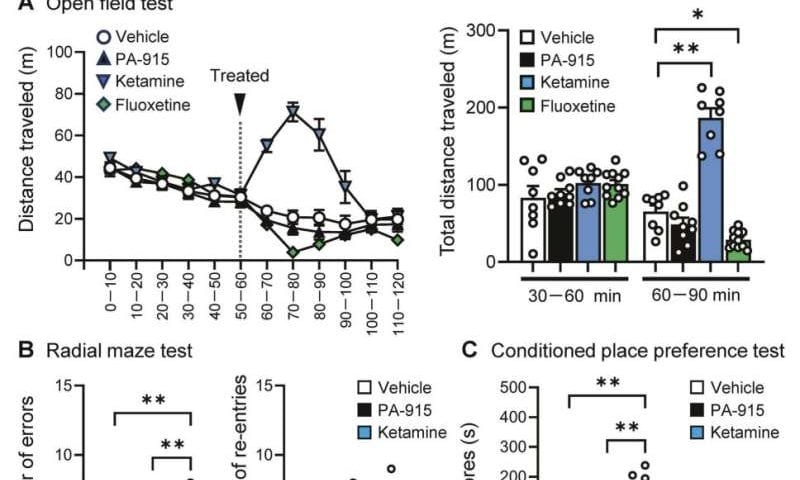
Researchers at the University of Osaka, Kobe University School of Medicine, Hamamatsu University School of Medicine and other institutes have recently developed a new molecule called PA-915, which could hold some promise for the treatment of depression, anxiety and stress-related disorders. In a paper published in Molecular Psychiatry, they showed that the molecule suppressed both anxiety-like and depression-like behaviors in mice who were placed under high levels of stress.

“Stress-related disorders, such as depression and anxiety, have been one of the most important medical issues,” wrote Yusuke Shintani, Atsuko Hayata-Takano and their colleagues in their paper. “Accumulating evidence suggests that the activation of the pituitary adenylate cyclase-activating polypeptide and its receptor PAC1 are involved in the stress axis and the development of stress-related disorders. We recently developed PA-915, a small-molecule, non-peptide, high-affinity PAC1 antagonist, and demonstrated that it significantly suppresses anxiety-like behavior in acute stress-induced mice.”

The primary objective of the recent study by Shintani, Hayata-Takano and their colleagues was to better understand how the intake of PA-915, a molecule that they developed as part of their earlier research, affected the behavior of mice with tendencies that mirrored those observed in human patients diagnosed with depression. PA-915 is a drug that blocks PAC1 receptors, which are known to play a role in stress responses and anxiety.

The researchers significantly raised the stress levels of mice employing a combination of strategies. These included repeatedly exposing the mice to an aggressive and dominant mouse, administering corticosterone (the main stress hormone in rodents) and isolating them from other mice.

“PA-915 ameliorated the increased immobility time in the forced swim test in these stress-induced mice,” wrote Shintani, Hayata-Takano and their colleagues. “In repeated social defeat stress mice, PA-915 improved anxiety-like and depression-like behaviors and cognitive dysfunction, as assessed by the light-dark, open field, elevated plus maze, sucrose preference, forced swim, Y-maze, and novel object recognition tests. In addition, we evaluated the usefulness of PA-915 as an antidepressant and compared it with ketamine and fluoxetine.”

Interestingly, the researchers found that the PA-915 molecule reduced depression-like and anxiety-like behaviors in the chronically stressed mice. The mice were found to swim more vigorously in the forced swim test, while also performing better in maze navigation and object recognition tasks.

The molecule’s antidepressant effects were also found to be long-lasting, resembling the effects previously reported with ketamine. Moreover, intake of the molecule did not appear to cause common side effects of some antidepressant or anxiolytic medications, such as hyperactivity, dependency or cognitive deficits.

“In the sucrose preference test, an antidepressant-like effect was observed for 8 weeks in mice that received a single dose of PA-915, which was a similar effect observed with ketamine,” wrote the authors.

In non-stressed control mice, PA-915 did not induce behavioral abnormalities, such as hyperlocomotion, cognitive dysfunction, or dependency. The present results show that PA-915 improves anxiety-like behaviors and cognitive impairment and exerts rapid and long-lasting antidepressant effects in chronic stress-induced mouse models of anxiety and depression, proposing a promising treatment option for stress-related disorders.”

Overall, the results of this recent study suggest that blocking PAC1 receptors is a promising pathway for treating depression and anxiety disorders. In the future, the molecule designed by the researchers could be improved further and tested on other animal models of stress-related disorders. If it proves safe and effective, it could then be assessed in human clinical trials, which could lead to its commercialization and use in health care settings.

Common hair-loss drug consistently associated with higher rates of psychiatric harm

For over two decades, finasteride—a popular prescription drug taken by millions of men to treat hair loss—has quietly carried a shadow. Behind its cosmetic promise lay disturbing signs of deeper harm: depression, anxiety, and in some cases, suicide.

Now, a new review by Prof. Mayer Brezis of the Hebrew University of Jerusalem suggests the medical and regulatory community failed the public—not once, but repeatedly—by overlooking mounting evidence of finasteride’s potentially devastating psychiatric effects.

The review, published in the The Journal of Clinical Psychiatry, compiles data from eight major studies conducted between 2017 and 2023, showing a consistent signal: users of finasteride were significantly more likely to experience mood disorders and suicidal thoughts than comparable patients not taking the drug. The findings span multiple countries and data systems, from the U.S. FDA’s adverse event reports to national health records in Sweden, Canada, and Israel.

“The evidence is no longer anecdotal,” said Prof. Brezis, a professor emeritus of medicine and public health. “We now see consistent patterns across diverse populations. And the consequences may have been tragic.”

According to the paper, hundreds of thousands of people may have suffered from depression related to finasteride use, and hundreds—possibly more—may have died by suicide. The drug, originally approved in 1997 by the FDA to treat male pattern baldness, has remained a staple in the dermatological toolbox, often marketed directly to young men as a low-risk, high-reward solution.

But beneath the surface, critics argue, warning signs were ignored.

A delayed response, with a high cost

While the FDA acknowledged depression as a potential side effect in 2011 and added suicidality in 2022, researchers had raised alarms as early as 2002. Internal FDA documents from 2010, cited in Brezis’ paper, reveal whole paragraphs blacked out as “confidential”—including estimates of how many users could have been affected.

By 2011, the FDA had recorded just 18 suicides linked to finasteride. But based on global usage estimates, that number should have ranged in the thousands. “It wasn’t just underreporting,” Dr. Brezis wrote. “It was a systemic failure of pharmacovigilance.”

Unlike weight-loss drugs or psychiatric medications that receive intense post-marketing scrutiny, finasteride’s cosmetic status may have helped it avoid deeper investigation. Notably, none of the data-mining studies cited in Brezis’ review were conducted by Merck, the original manufacturer, or requested by regulators.

A cosmetic drug with life-altering risks

Brezis argues the drug’s classification as a non-essential, appearance-enhancing medication changes the risk calculus. “This wasn’t about life or death medical necessity,” he said. “This was about hair.”

The biological rationale is clear. Finasteride works by blocking the conversion of testosterone into dihydrotestosterone (DHT), but in doing so, it may also disrupt neurosteroids like allopregnanolone—linked to mood regulation in the brain. Animal studies have shown long-term effects on neuroinflammation and even changes in hippocampal structure.

For some patients, the consequences don’t end when the pills do. Reports of lingering symptoms—dubbed “post-finasteride syndrome”—include insomnia, panic attacks, cognitive dysfunction, and suicidal thoughts that persist months or even years after stopping treatment.

Regulatory gaps, corporate silence

The report is especially scathing toward the FDA and Merck. Despite having access to millions of patient records and robust pharmacovigilance tools, neither party acted in time, Brezis argues. The industry’s silence was strategic, he suggests, driven by market pressures and legal liability—echoing past controversies like Merck’s handling of Vioxx.

“Nothing is more important to Organon than the safety of our medicines,” the company recently claimed in a public statement. Yet none of the safety studies cited were initiated by the manufacturer.

The FDA, meanwhile, took five years to respond to a citizen petition calling for a black-box warning. Its final decision? To add suicidal ideation to the label—but not as a formal warning.

Brezis is calling for immediate changes in how drugs like finasteride are approved, monitored, and prescribed. His recommendations include suspending marketing of the drug for cosmetic purposes until safety is re-established, mandatory post-approval studies with strict enforcement, and systematic recording of drug histories in suicide investigations.

For many, those changes come too late.

The paper is dedicated to one such individual—a previously healthy man who took finasteride “just” to improve his hair. Within days, he spiraled into severe psychiatric distress. He never recovered. Months later, he took his own life.

Optic nerve added to multiple sclerosis criteria in major diagnostic update

The International Advisory Committee on Clinical Trials led a multinational panel updating the McDonald criteria, adding the optic nerve as a fifth anatomical location and allowing specific magnetic resonance imaging (MRI) and cerebrospinal fluid (CSF) markers to support diagnosis without mandatory dissemination in time in defined scenarios.

Multiple sclerosis diagnosis has long required proof that lesions occur in different places and at different times, with MRI and CSF biomarkers gradually shortening time to treatment.

Previous revisions improved sensitivity and specificity across ages and regions, yet misdiagnosis risk still persists, especially with overlapping conditions and when access to specialized tests is limited.

In the study, “Diagnosis of multiple sclerosis: 2024 revisions of the McDonald criteria,” published in The Lancet Neurology, researchers convened an international consensus process to revise diagnostic rules in light of advances in imaging and biomarkers.

Fifty-six contributors met in Barcelona, including 32 members of the International Advisory Committee on Clinical Trials. Voting used a comprehensive list of statements with predefined thresholds, and four items were voted on again after discussion.

Experts applied a modified nominal group technique with anonymous electronic voting on a five-point scale. Consensus required at least 90% participation and 80% agreement. Evidence covered optic nerve assessment by optical coherence tomography (OCT), visual evoked potentials (VEP), and MRI, central vein sign methods, paramagnetic rim lesions on susceptibility imaging, and kappa free-light chain assays, along with algorithms for relapsing, progressive, pediatric, and radiologically isolated presentations.

Findings set the optic nerve as a fifth site for dissemination in space when no better explanation exists.

Dissemination in space is fulfilled when two of five regions show typical lesions, symptomatic or not, with a provision that lesions in four or five regions can suffice for diagnosis in typical presentations.

Dissemination in time (DIT) is no longer mandatory in defined scenarios, yet was retained in the criteria because new or simultaneous enhancing and non-enhancing lesions increase diagnostic specificity.

Central vein sign using the select-6 method is sufficient to diagnose multiple sclerosis in clinically or radiologically isolated syndrome when lesions involve at least two anatomical locations. In patients with typical clinical presentations with lesions in only one location, select-6 positivity together with either positive CSF or DIT on MRI is also sufficient for diagnosis.

Paramagnetic rim lesions can similarly increase specificity and, in defined scenarios, contribute to diagnosis with CSF positivity or dissemination in time. Kappa free light chain index is interchangeable with oligoclonal bands for identifying positive CSF.

Radiologically isolated syndrome and other non-specific presentations can meet criteria when dissemination in space is present with additional features such as positive CSF, central vein sign, or dissemination in time.

A single framework now applies to pediatric-onset and adult-onset disease and to relapsing and progressive courses, with recognition that two or more spinal cord lesions can demonstrate dissemination in space in progressive presentations.

Additional tests are strongly recommended for individuals aged 50 years or older or with vascular risk factors, including spinal cord lesions, positive CSF, or central vein sign positivity, to reduce misdiagnosis.

Authors conclude that updated criteria should expedite diagnosis while maintaining specificity across diverse settings. The updated guidance addresses older age and comorbidities, incorporates accessible paraclinical tools, and moves toward a unified biological framework that can improve pathways to timely care.

Mediterranean-style diets may still lower cardiovascular risk independent of lean beef intake

National Cattlemen’s Beef Association funded research finds that Mediterranean-style eating with lean beef produces less trimethylamine N-oxide (TMAO) compared with a typical American diet that included the same amount of beef.

Cardiovascular risk has been linked to diet quality and to microbiome-derived metabolites such as TMAO. Eating beef has been shown to increase cardiovascular risk due to high saturated fats raising LDL cholesterol, and chemicals produced by gut bacteria from red meat that increase TMAO levels, promoting arterial plaque buildup, and inflammation. Consuming red and processed meats is linked to a higher risk of heart disease, heart attacks, strokes, and death.

Previous clinical trials have hinted that lean, unprocessed red meat can fit within heart-healthy patterns without worsening traditional risk factors.

In the study, “Effect of Varying Quantities of Lean Beef as Part of a Mediterranean-Style Dietary Pattern on Gut Microbiota and Plasma, Fecal, and Urinary Metabolites: A Randomized Crossover Controlled Feeding Trial,” published in Journal of the American Heart Association, researchers conducted a randomized four-round crossover controlled-feeding trial, researchers compared Mediterranean-style diets containing 14, 71, or 156 g/day per 2,000 kcal of lean beef with an average American diet containing 71 g/day per 2,000 kcal, and in a post hoc exploratory analysis evaluated gut microbiota and TMAO-related metabolites.

Each diet period lasted four weeks with at least a one-week washout. Participants included 30 generally healthy adults from the Penn State site who completed at least two full diet periods.

Blood, 24-hour urine, and fecal samples were collected at baseline and end of each period. Plasma, urine, and fecal metabolites were quantified by proton nuclear magnetic resonance and liquid chromatography–mass spectrometry.

Gut microbiota composition was profiled by 16S rRNA gene amplicon sequencing. Compliance exceeded 90%. Randomization followed an orthogonal Latin-square design with blinding of coordinators, investigators, analysts, and statisticians for outcome assessment and analysis.

Sodium was lower in the Mediterranean-style menus, with target values reported as below 2,300 mg per 2,000 kcal versus around 3,500 mg per 2,000 kcal in the average American diet.

Compared with the average American diet menu, Mediterranean-style menus differed on several reported components. Mediterranean-style was 20–31% higher in total fat, 7–13% higher in protein, 91–110% higher in monounsaturated fat, 13–23% higher in polyunsaturated fat, 15–30% higher in fiber, 8–28% higher in marine n-3, and 20–32% higher in α-linolenic acid. The American diet was higher in carbohydrates by 20–33% and saturated fat by 28–54%.

Compared with the average American diet, Mediterranean-style diets differed in several reported outcomes. The Mediterranean-style was higher in gut microbiota diversity, 1.78–2.04-fold lower in plasma TMAO with 14 g and 71 g of lean beef per 2,000 kcal, 1.76–2.15-fold lower in urinary TMAO across 14 g, 71 g, and 156 g, and higher in plasma l-carnitine with 71 g and 156 g.

The American diet was higher in fecal choline than the Mediterranean-style diet, with 71 g. TMAO concentrations remained below the reported clinical cut point across all study diets.

Findings from the randomized crossover trial show that with beef held constant (71 g per 2,000 kcal), the average American diet produced higher plasma and urinary TMAO than Mediterranean-style eating. Within the Mediterranean-style pattern, raising lean beef from 14 g to 156 g per 2,000 kcal did not raise TMAO. Interpretation restricted to these endpoints points to the overall diet pattern, not beef, as the driver of the observed TMAO differences in this cohort.

It is important to note that this study was funded by the National Cattlemen’s Beef Association. While the research was conducted with rigorous controls and blinding, readers should consider the funding source when interpreting the results, as industry funding can introduce potential bias.

Outcomes were short-term TMAO, exploratory and not the prespecified primary endpoints of the parent trial, which was powered for LDL-C.